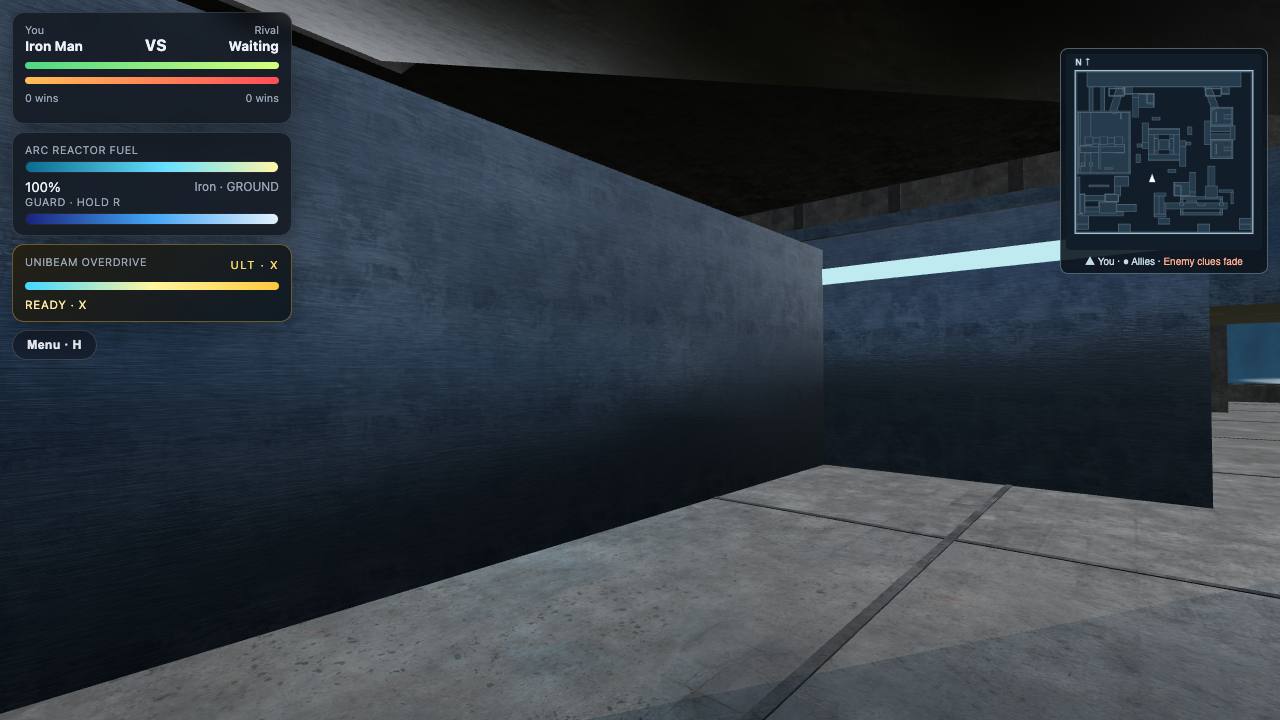
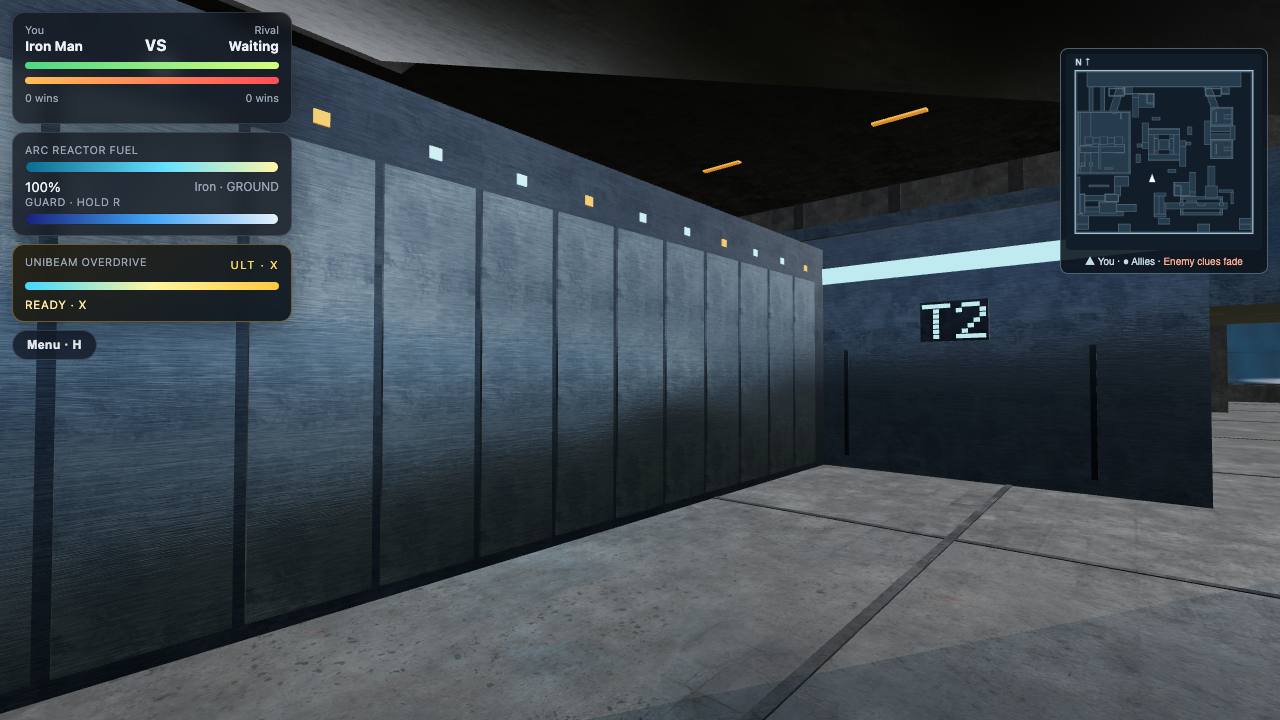
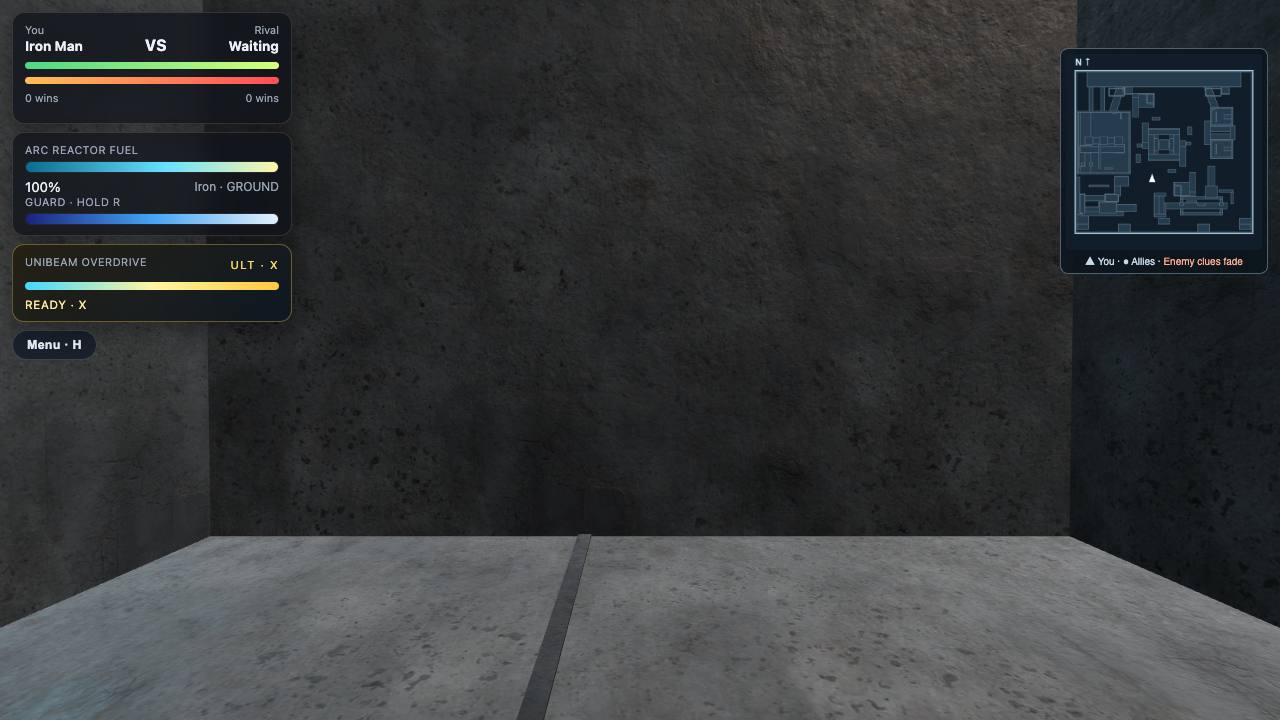
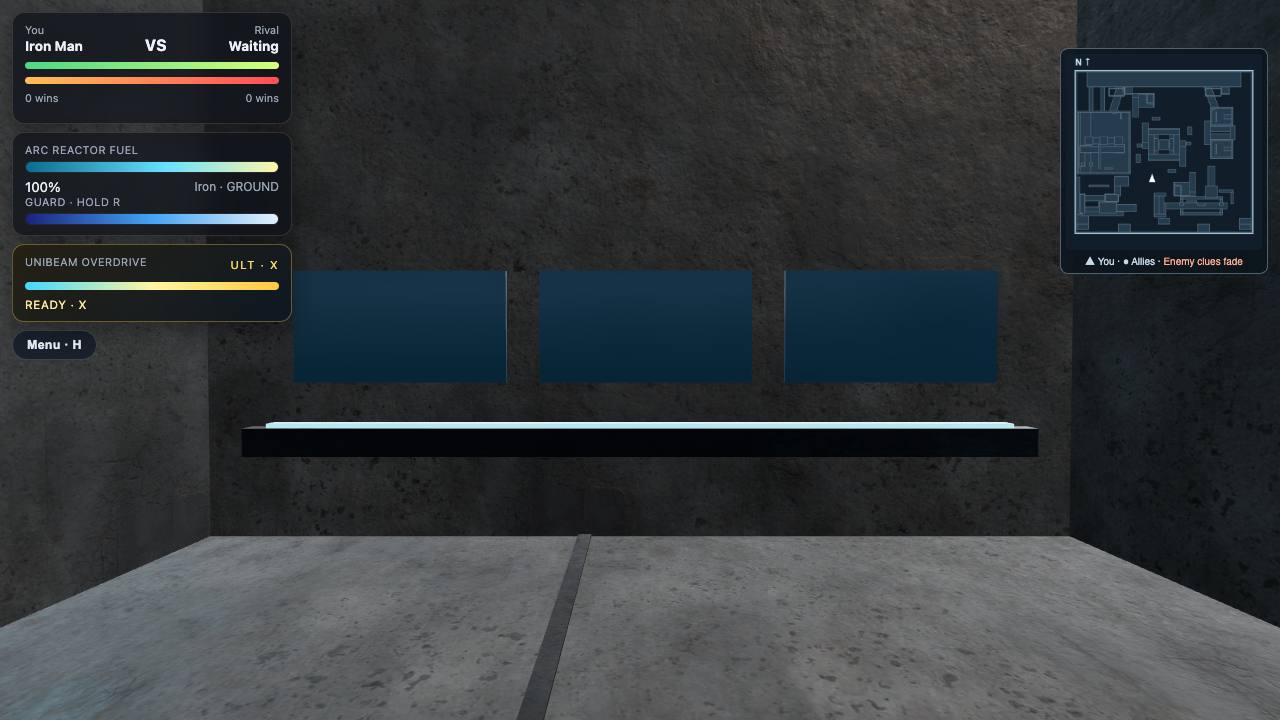
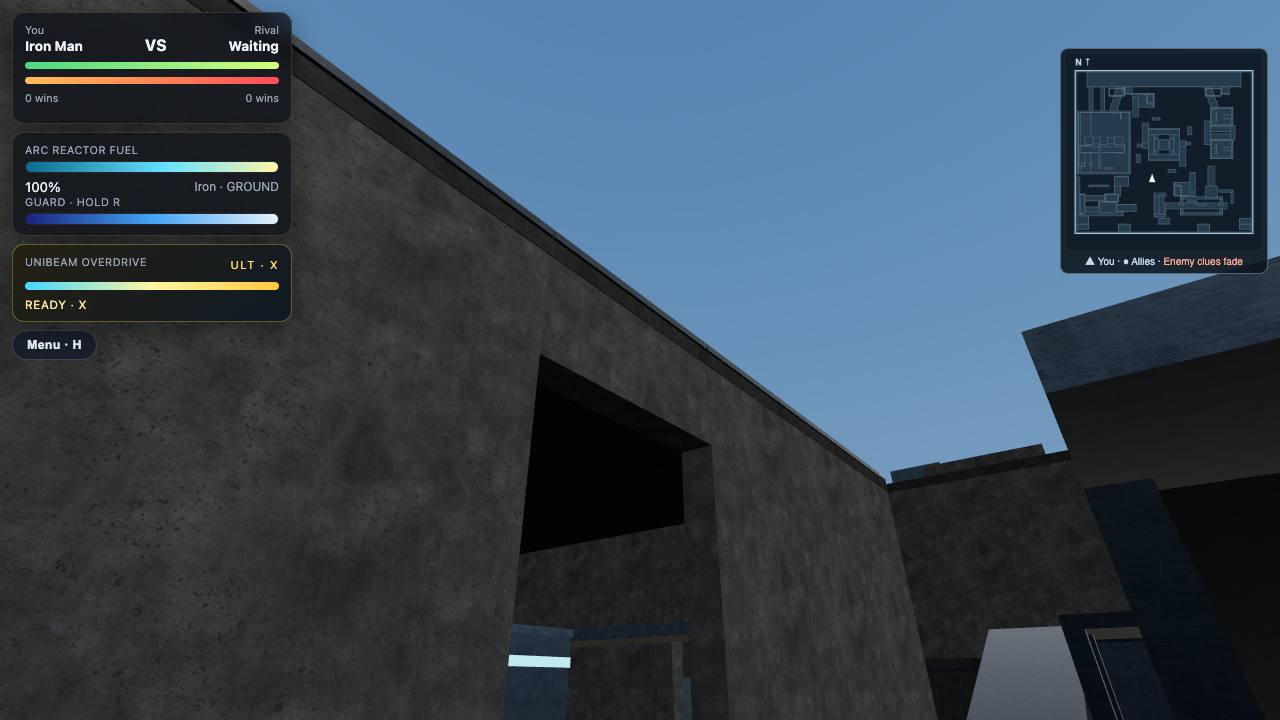
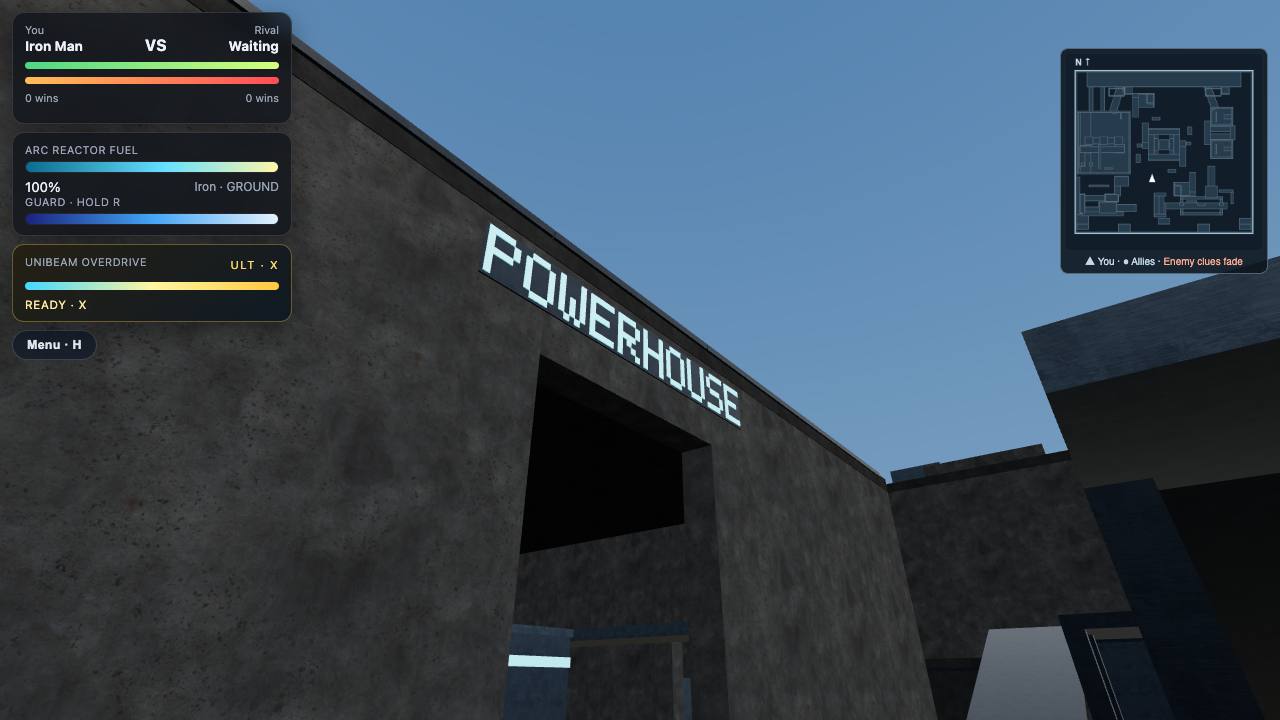
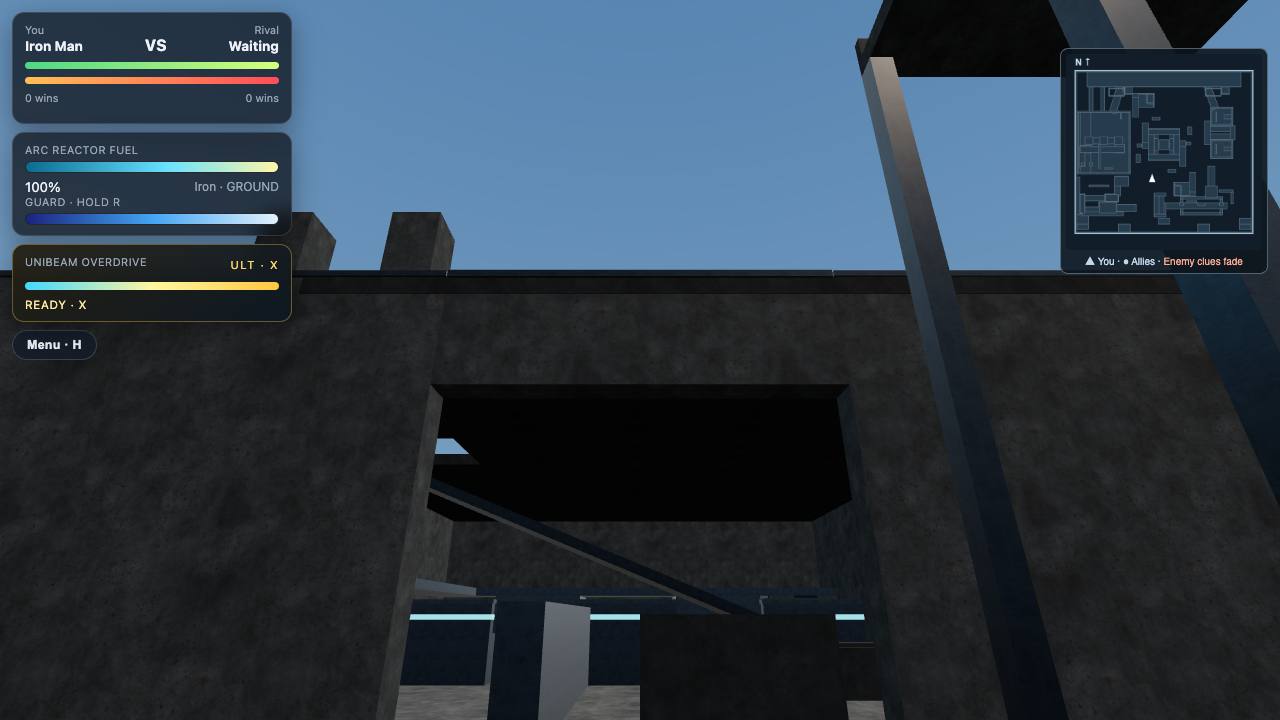
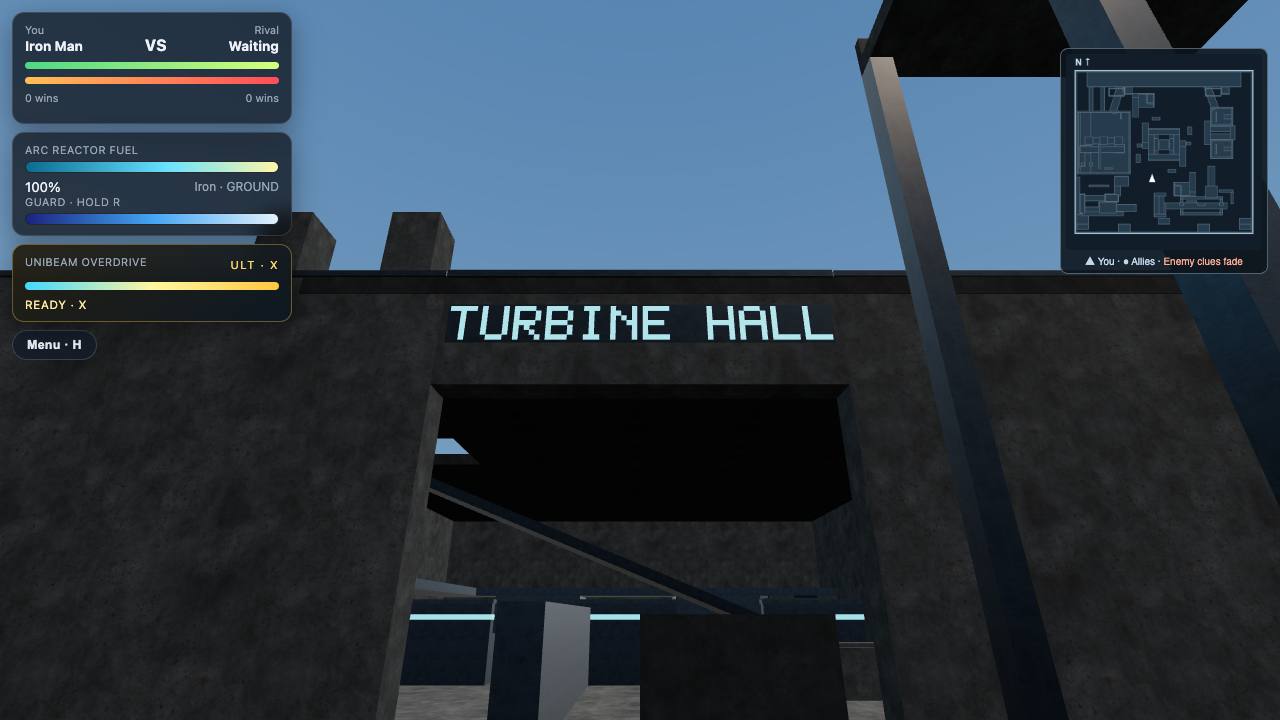
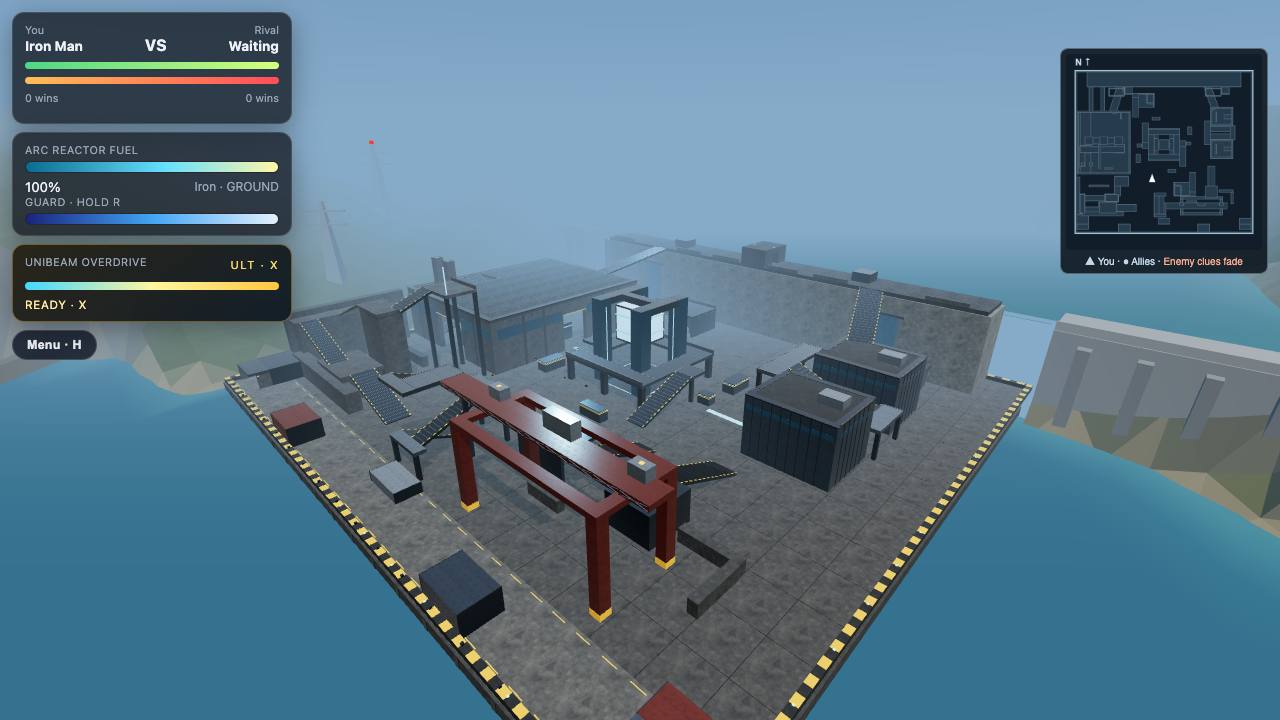
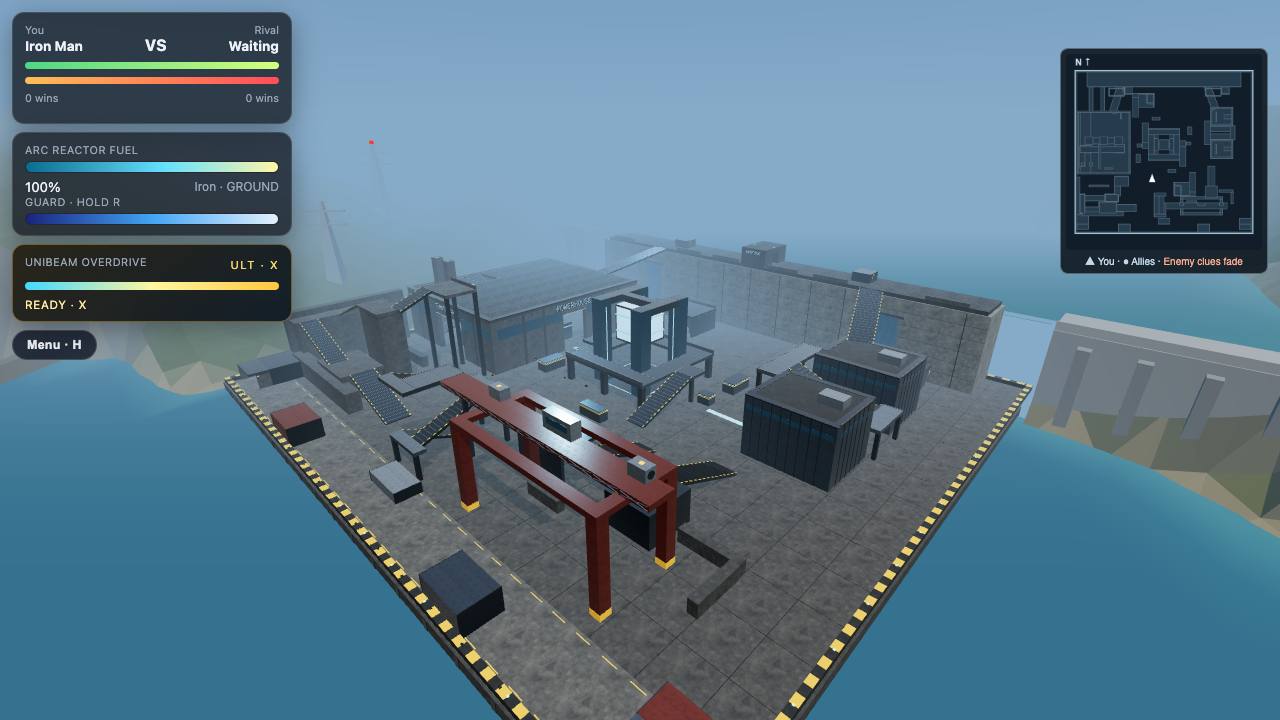
Tidal Works felt simplified next to Stormbreak Harbor. Stormbreak's sense of place came from named buildings, equipment that explains each building's job, and moving water. This pass brings those back with restraint. Detail goes where it tells you where you are and what the place does. Combat surfaces, the Arc and the open floor stay calm.
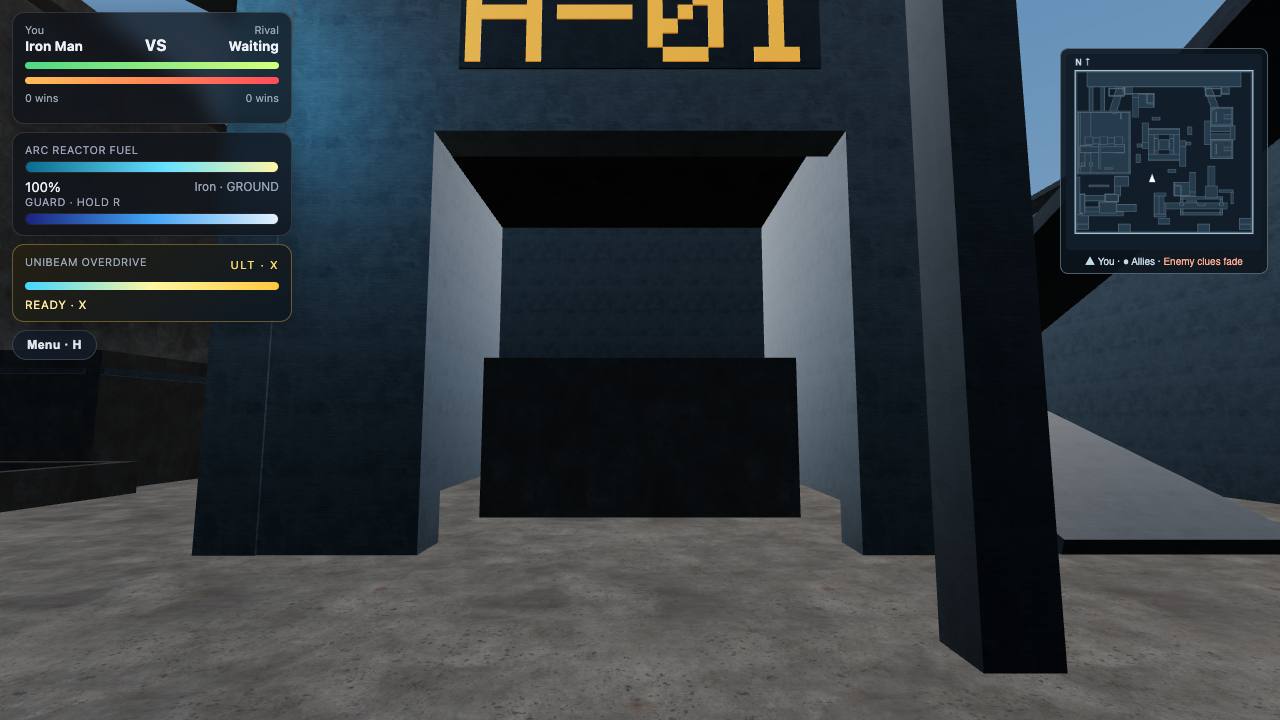
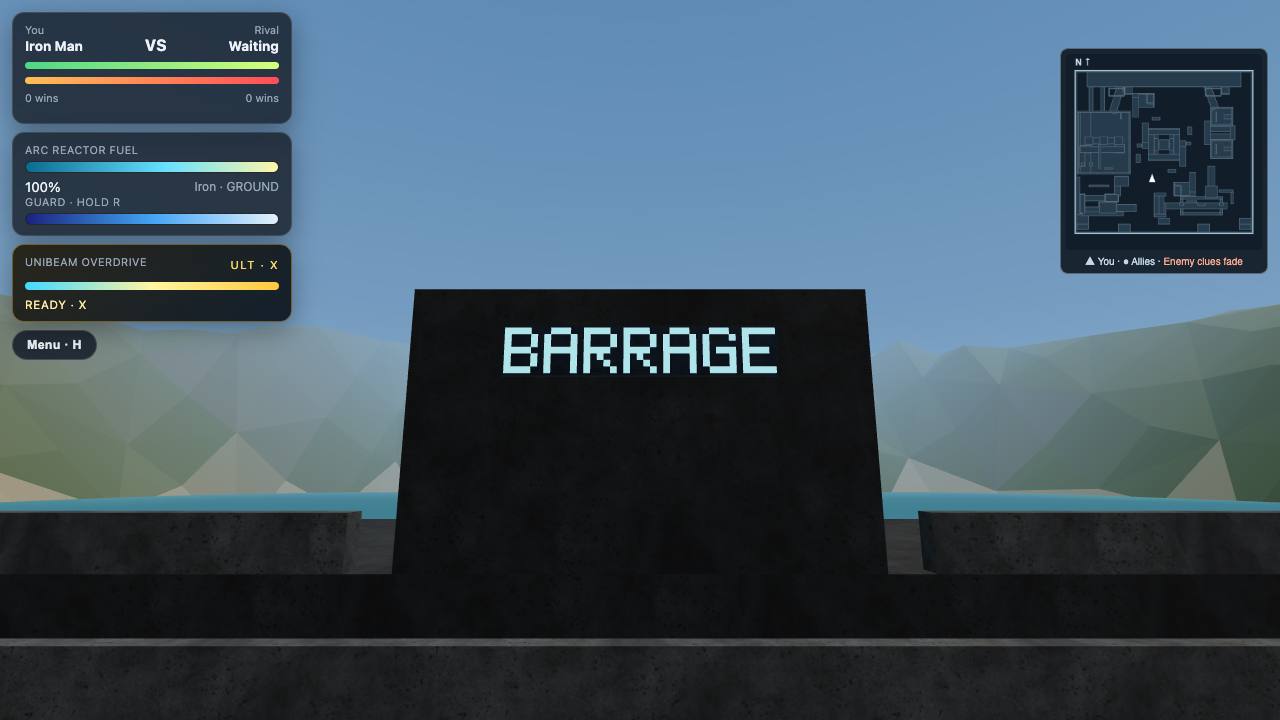
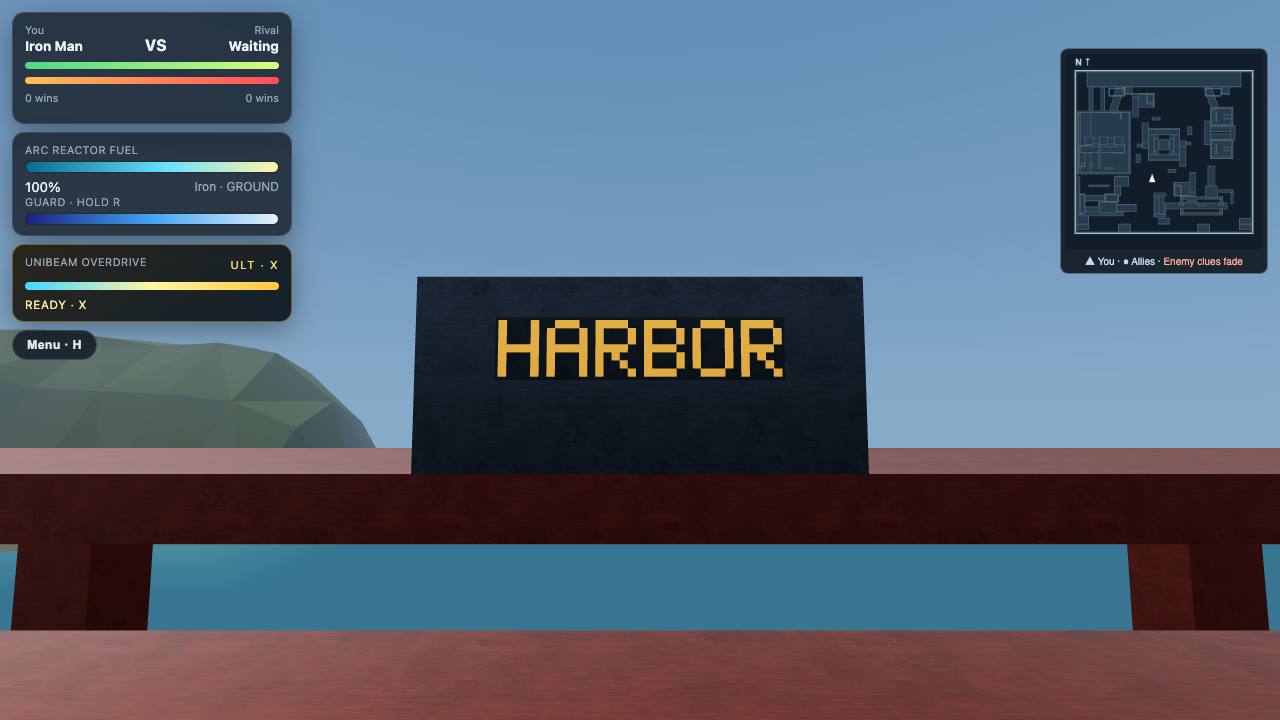
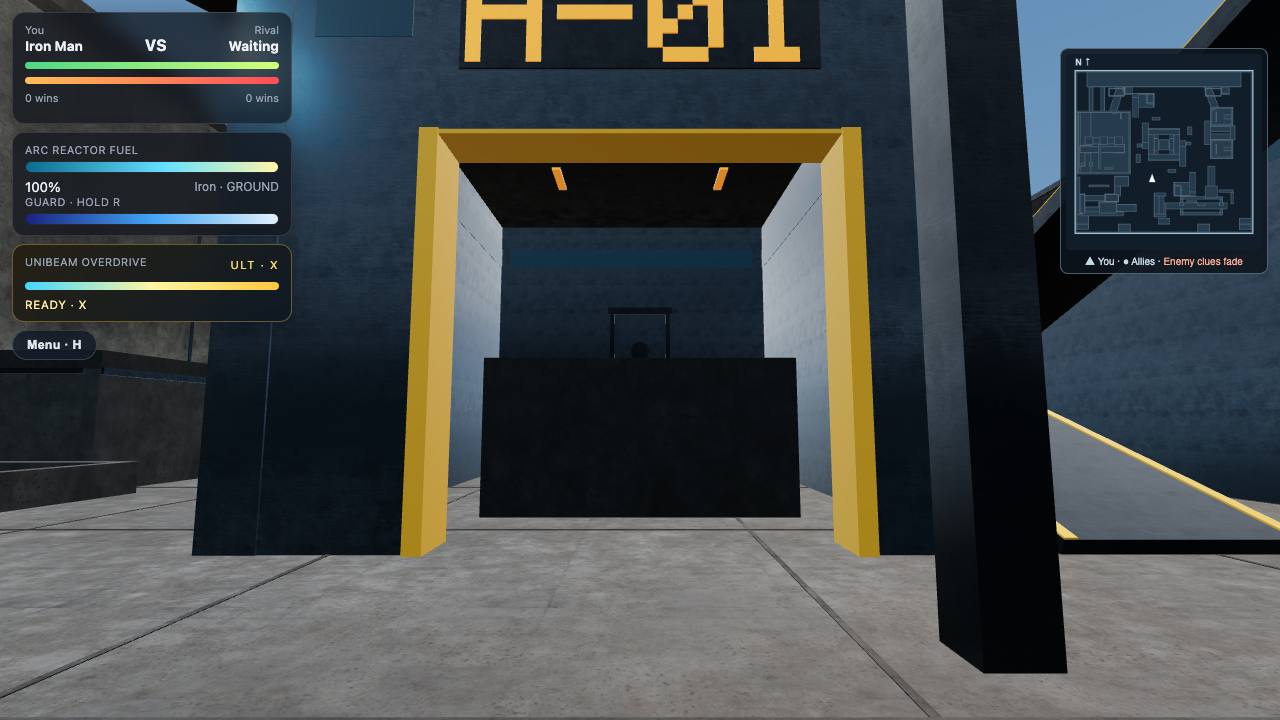
Readable names on every key building: POWERHOUSE, TURBINE HALL, H-01, H-02, BARRAGE and HARBOR, in all three quality tiers. SLUICE S-1, QUAY Q-1 and turbine labels T1–T3 appear from balanced up; door labels CONTROL, G1 and G2 on high only. The style is LED-matrix lettering on dark panels: cyan for Stark facilities, amber for the suit bays and harbour.
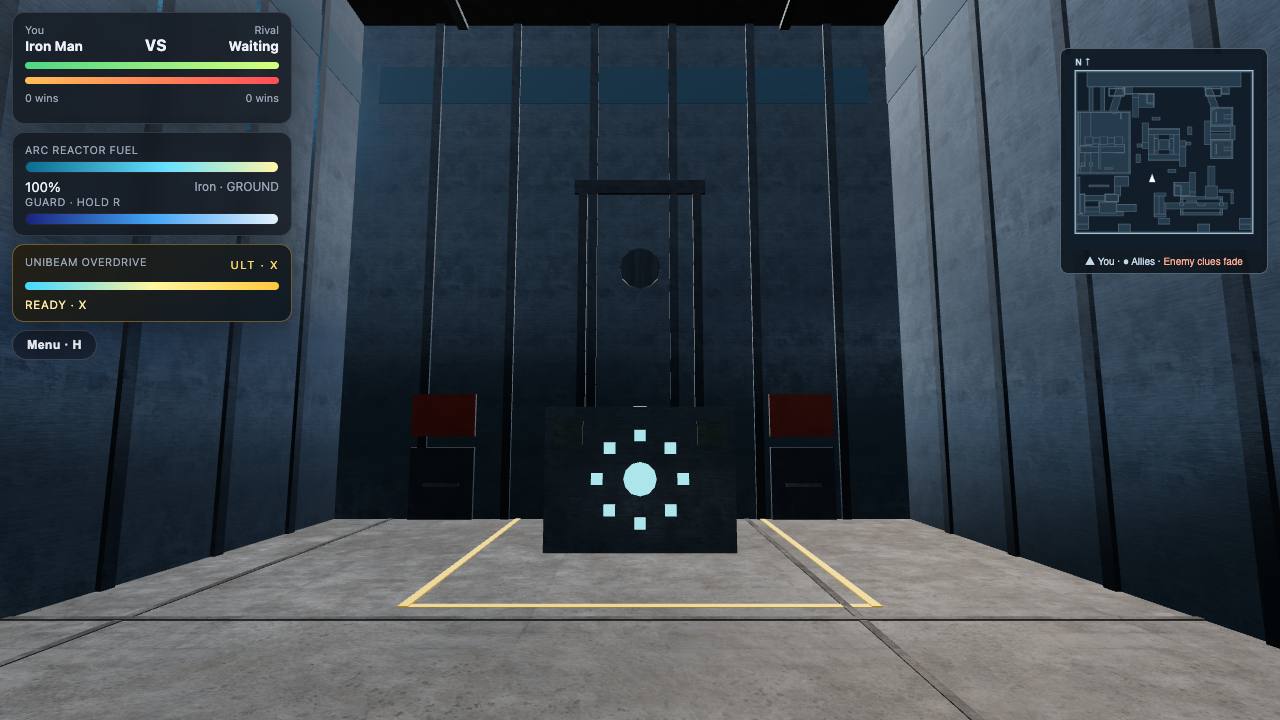
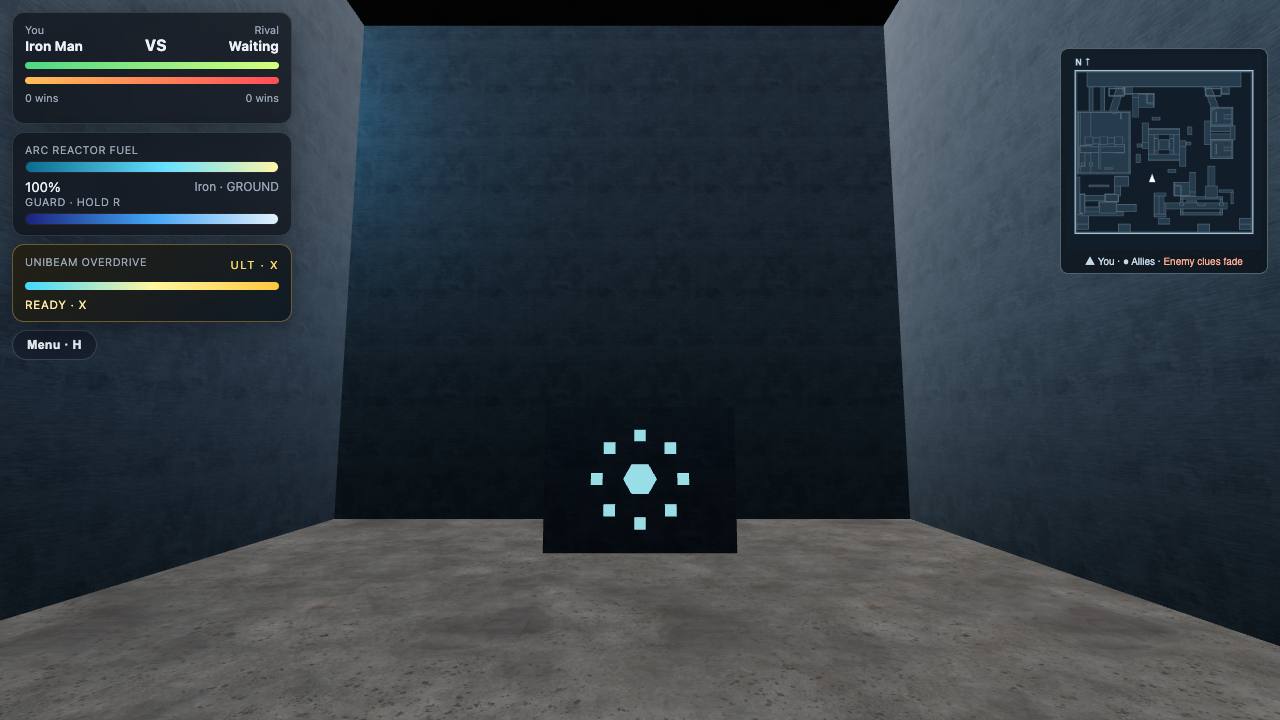
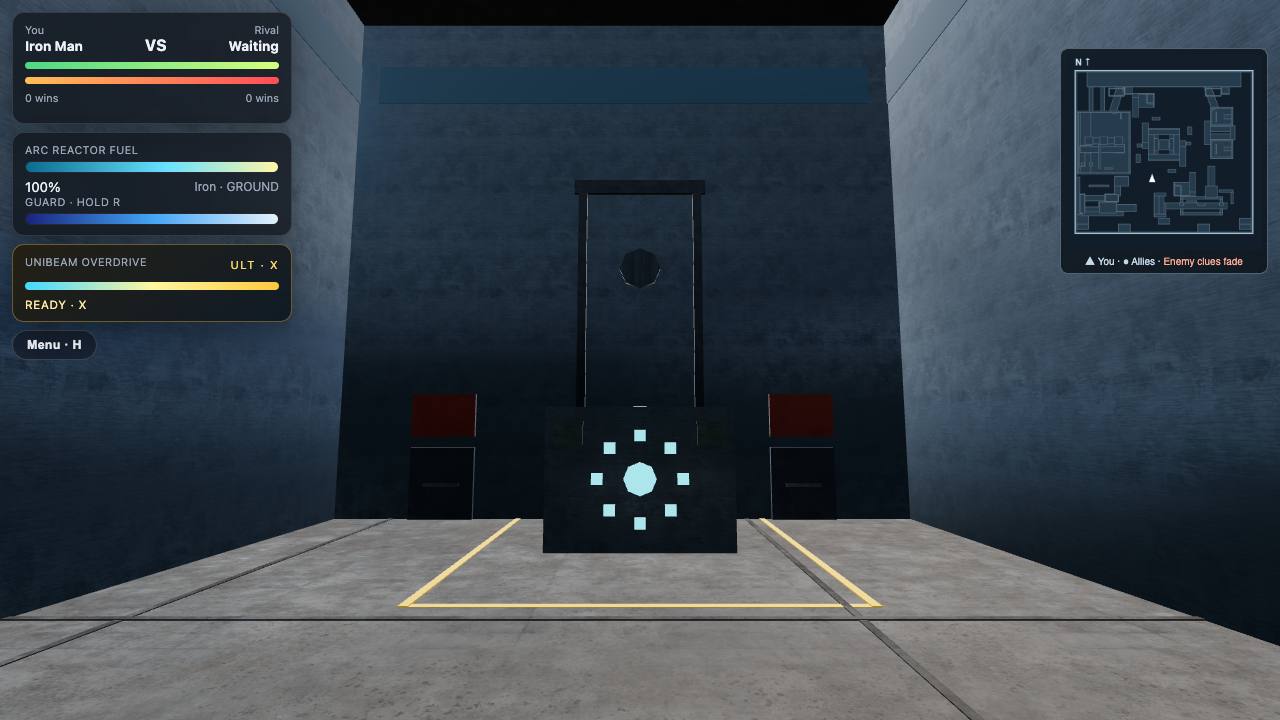
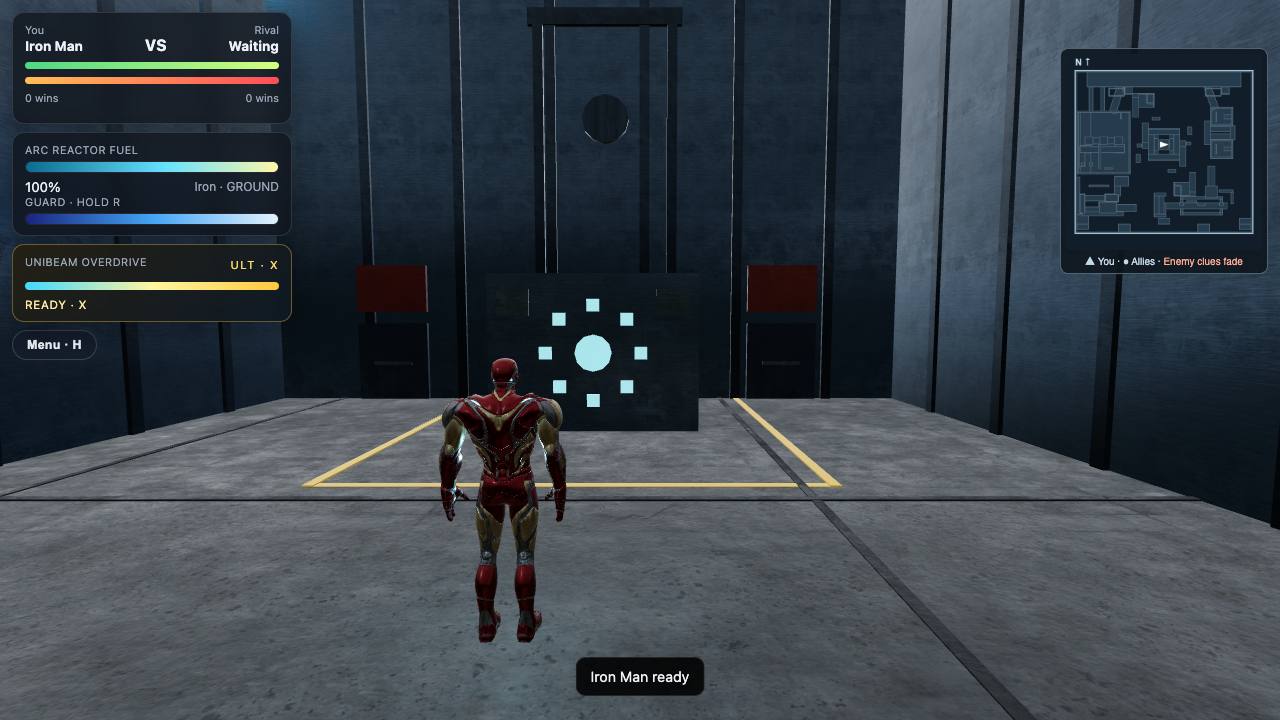
Suit Bays H-01 / H-02 are now suit bays:
a glowing arc ring on each suit cradle (every tier);
clamp plates, a back-wall suit frame with a cable reel, tool cabinets and boards;
amber ceiling service panels and trusses, and a hazard service outline on the floor.
Powerhouse reads as a turbine hall:
white turbine hatches in hazard frames, panel seams and shaft flanges;
a lit switchgear cabinet row with status lamps;
wall-mounted overhead-crane rails (broken at the south gate), cable trays under the galleries;
a control-room console with screens, and roof light panels.
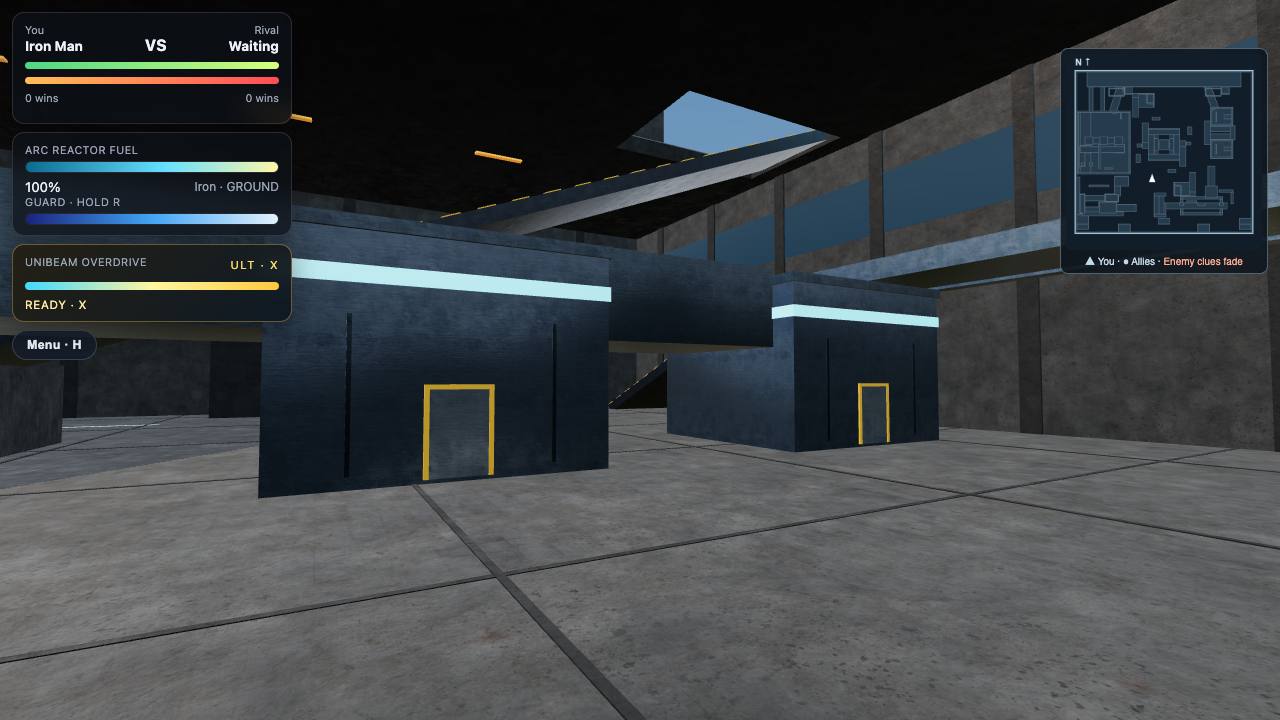
Sheds, barrage and harbour:
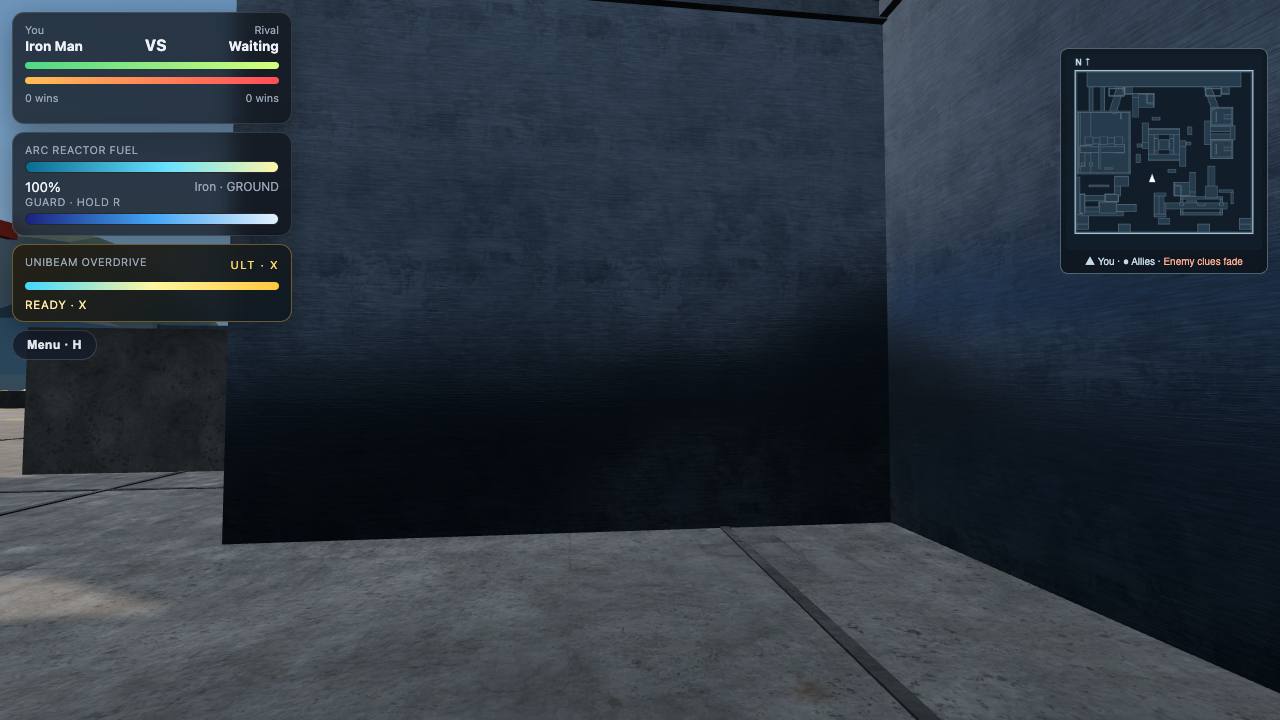
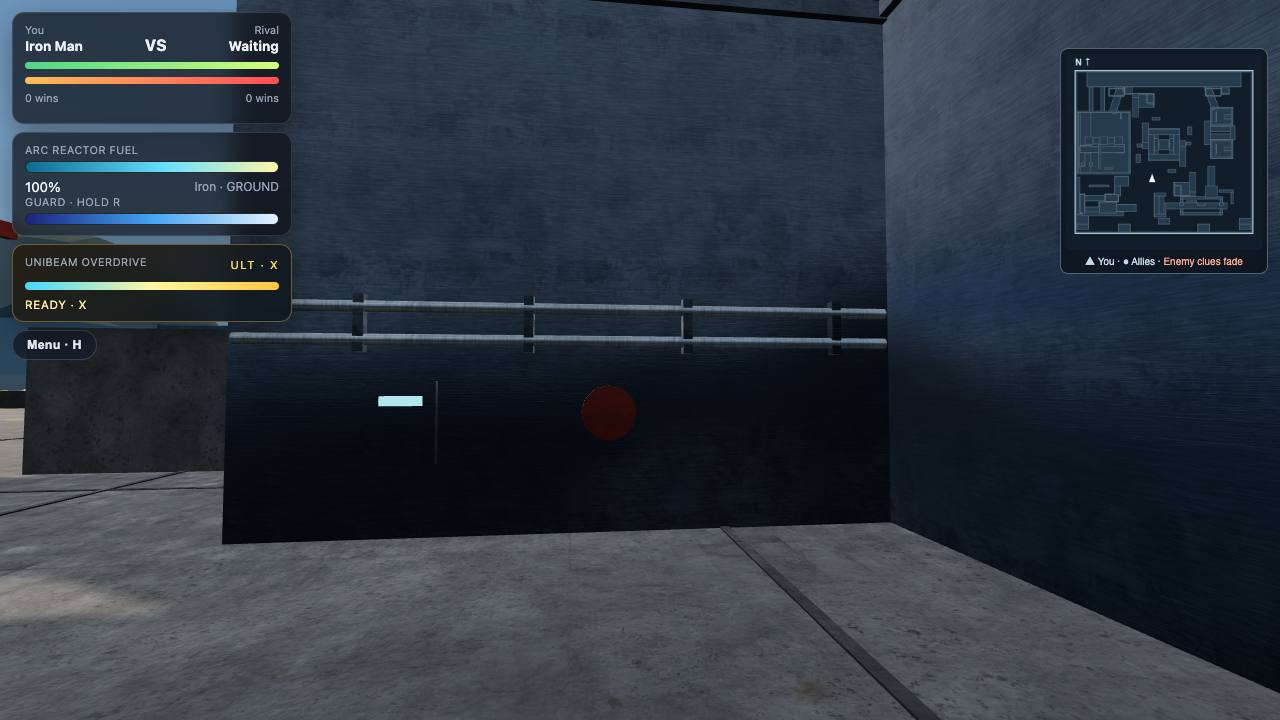
sheds: white pump pipes, a red valve, a lit control box, store shelving;
barrage: expansion joints and lift lines on the dam face, outlet frames, cable drums on the winch houses;
harbour: crane cab glass and cable reels.
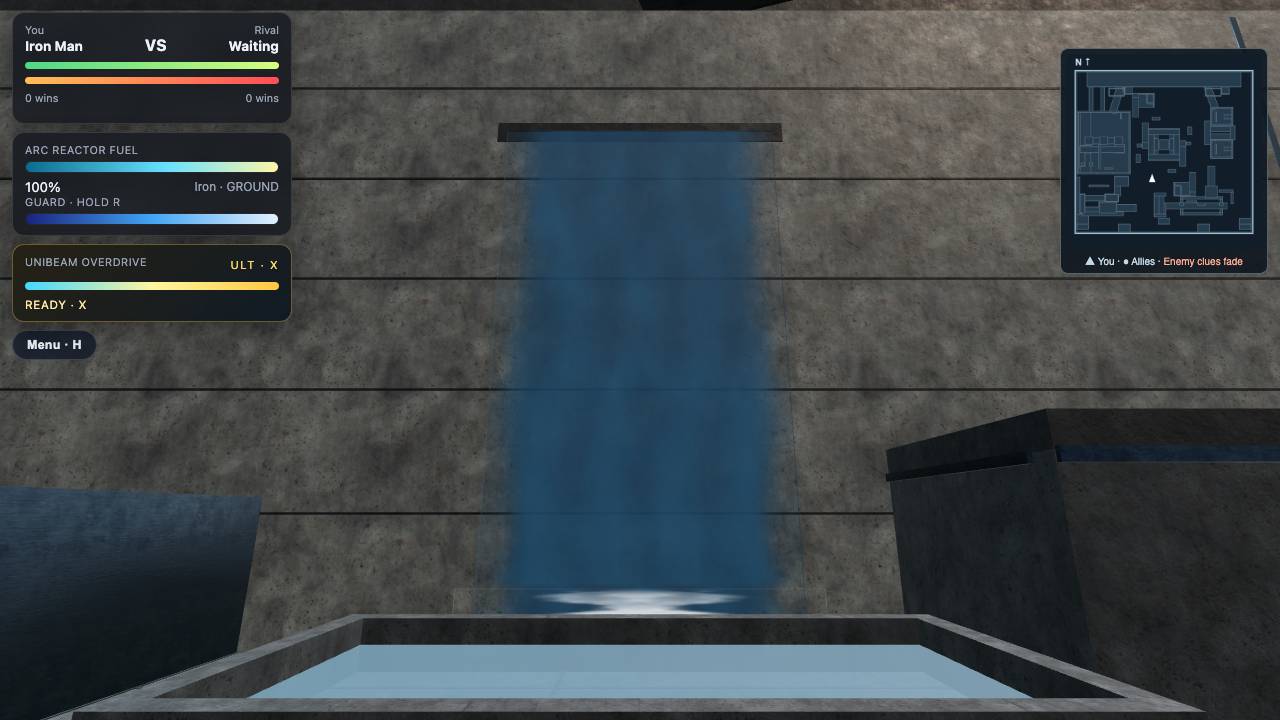
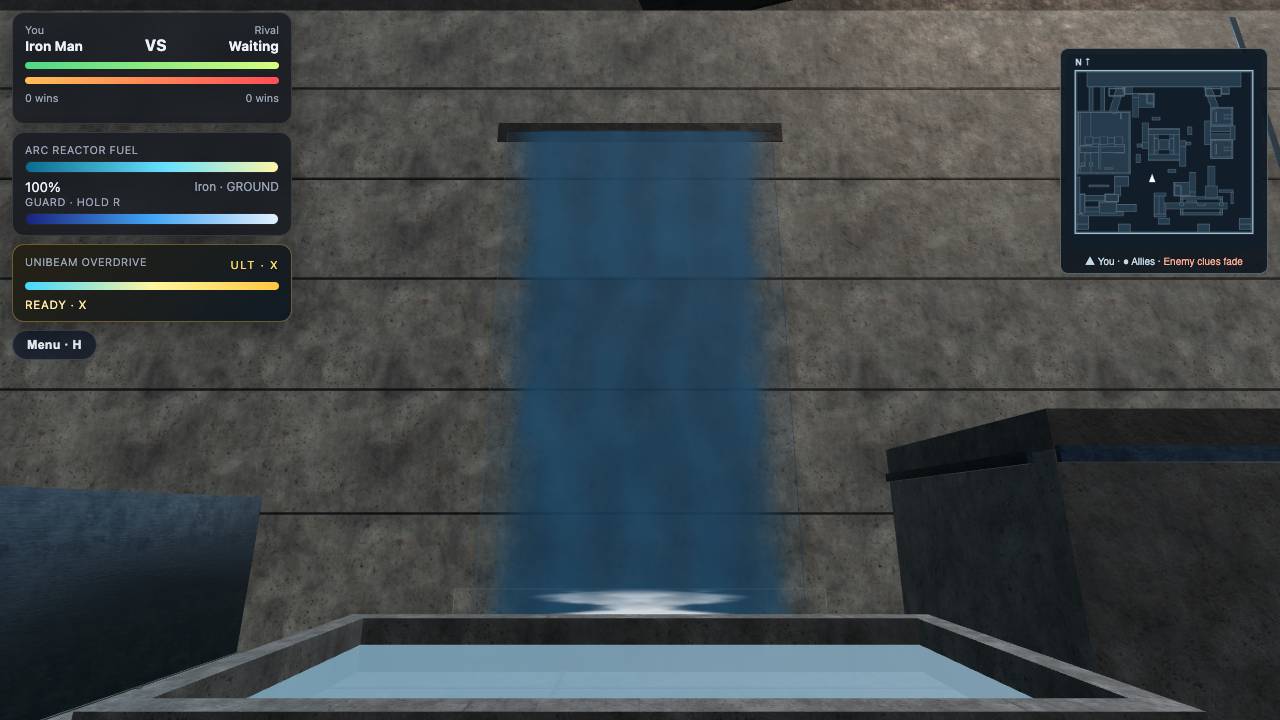
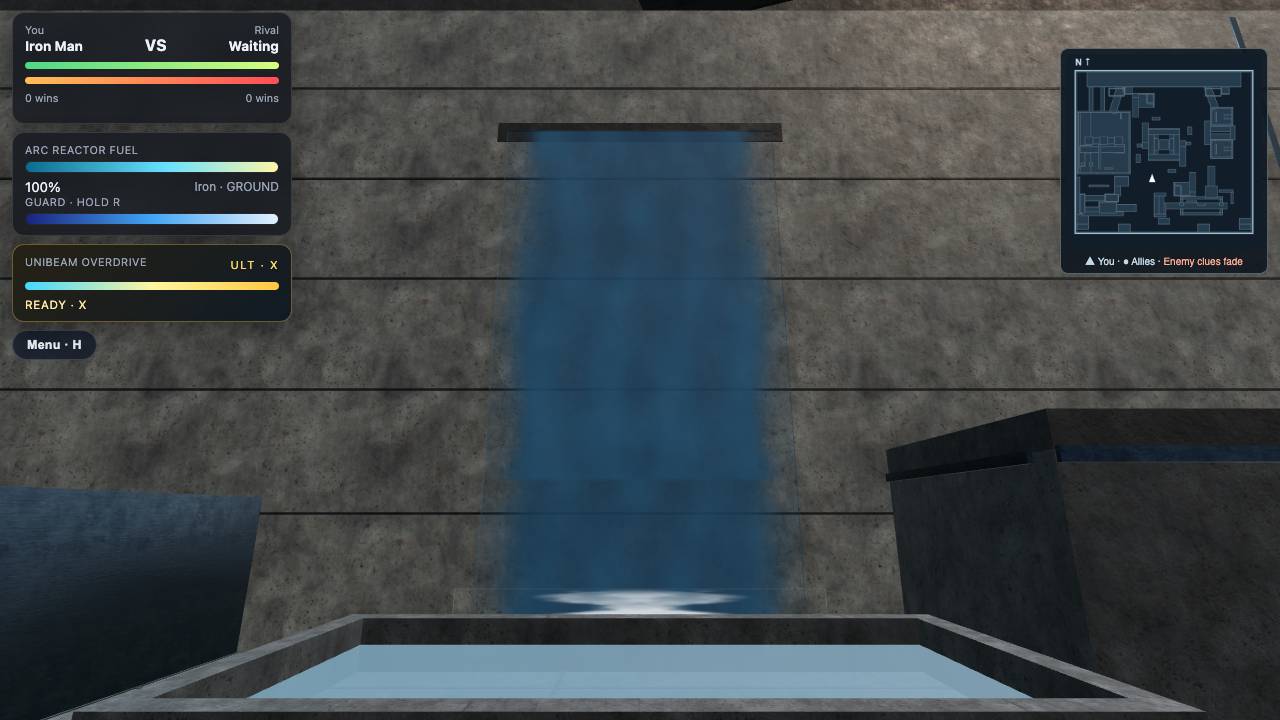
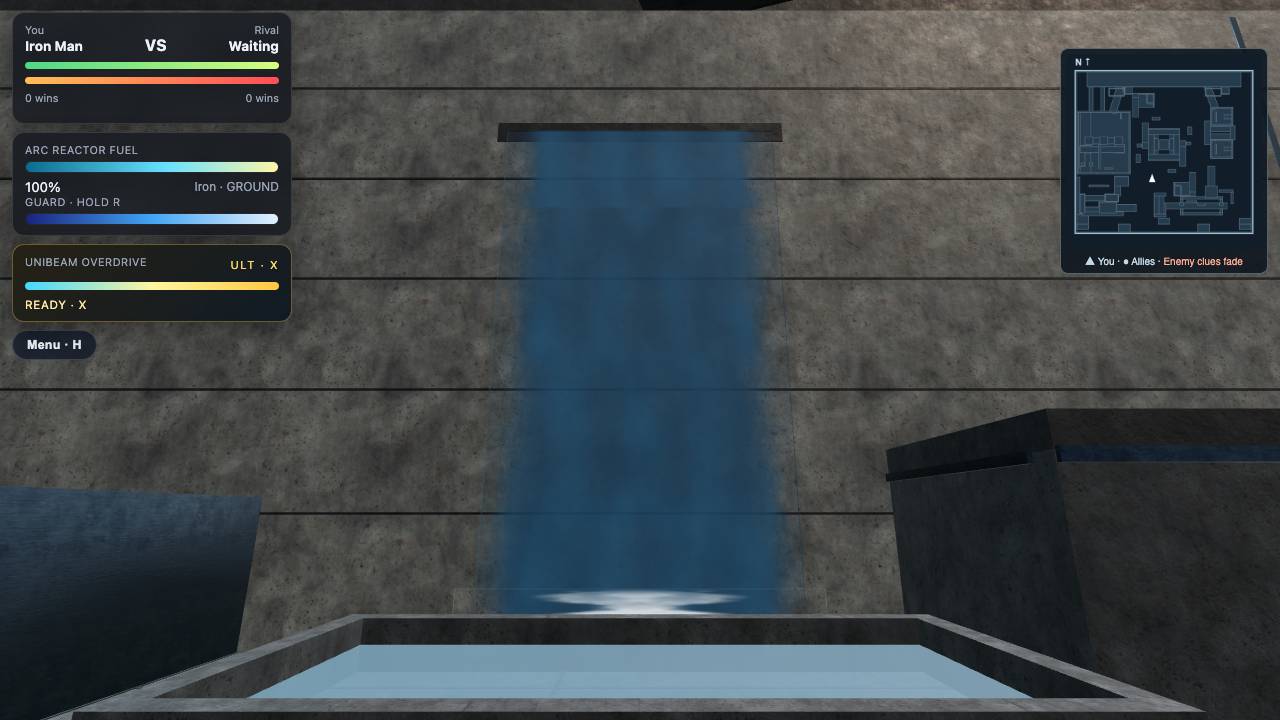
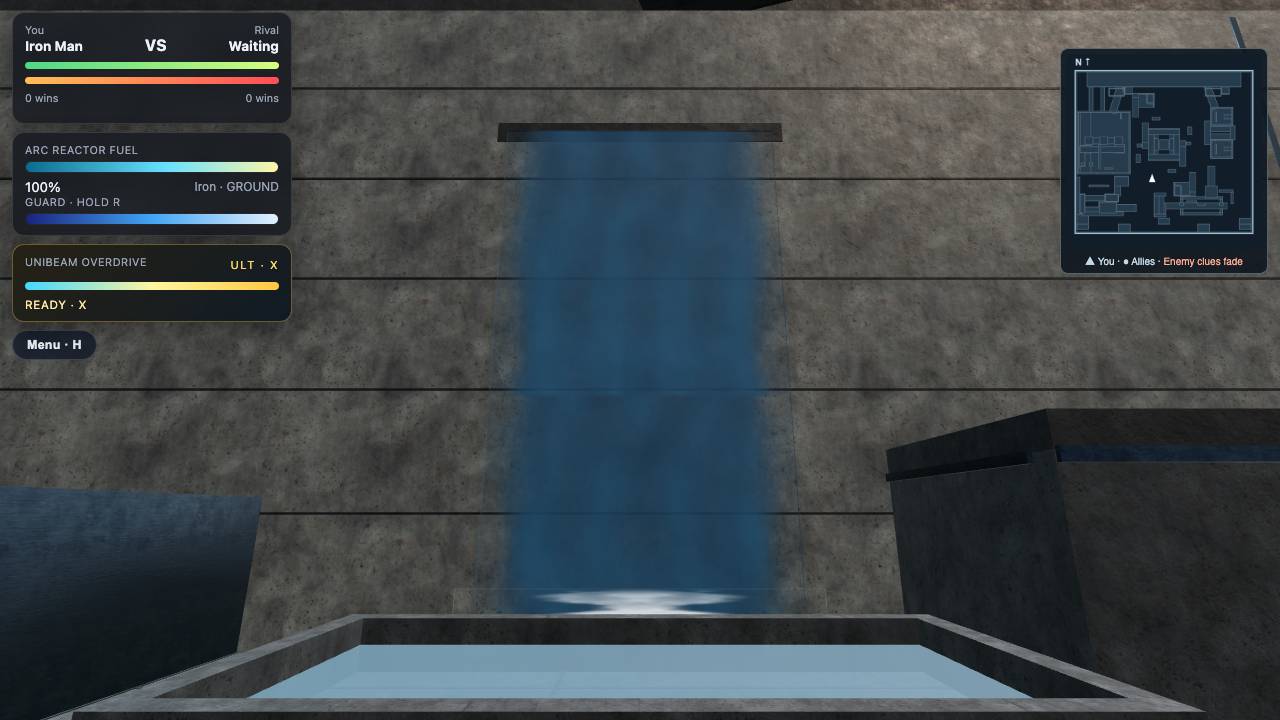
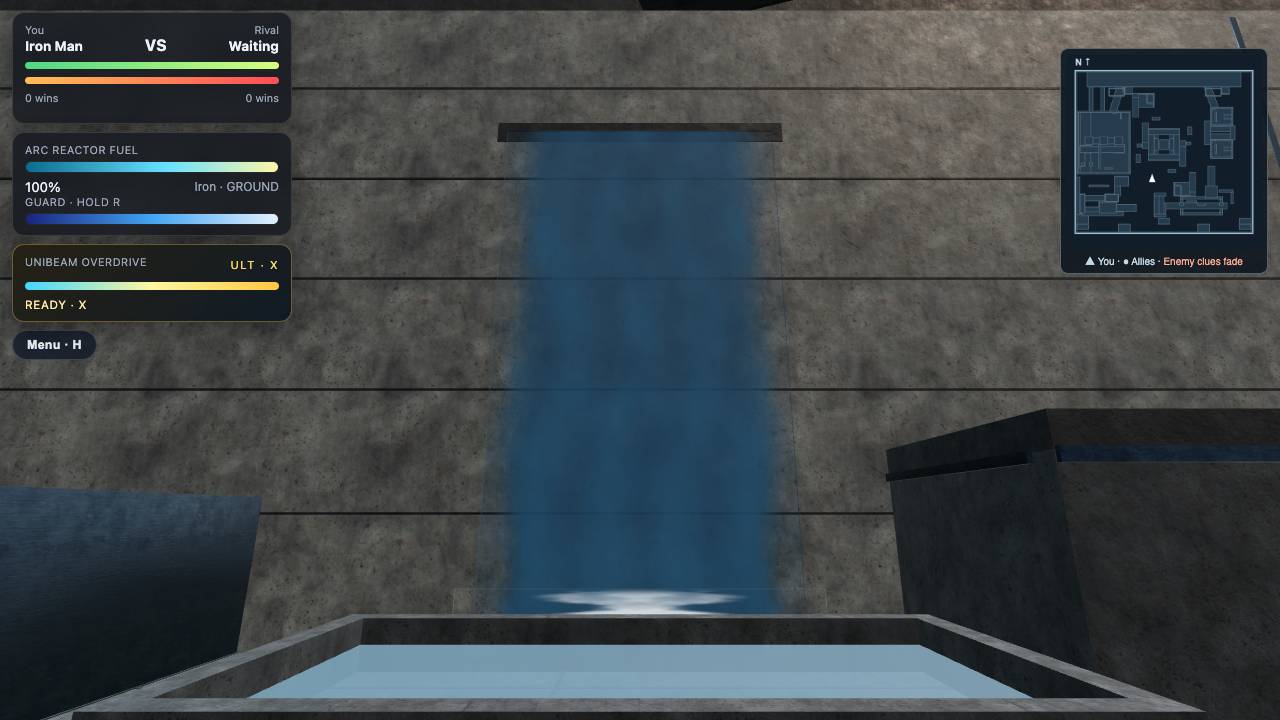
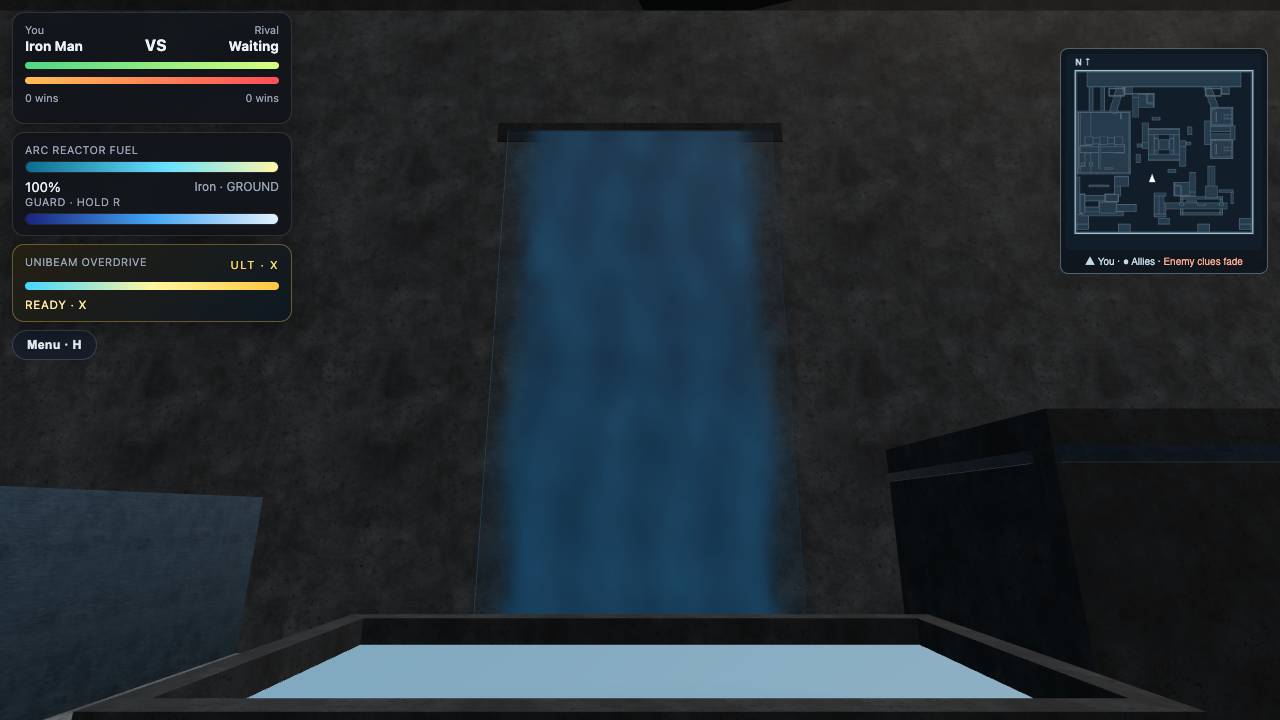
The barrage spill falls now flow (high and balanced). Low stays static.
Deliberately not added:
floor arrows, which could hide combat warning rings;
Arc inlays and lettering, to keep the centre calm;
fake light pools (not earned), railings, a free-standing crane bridge;
benches or crates, which would need collision (see proposals below).
Before / after (matched cameras)
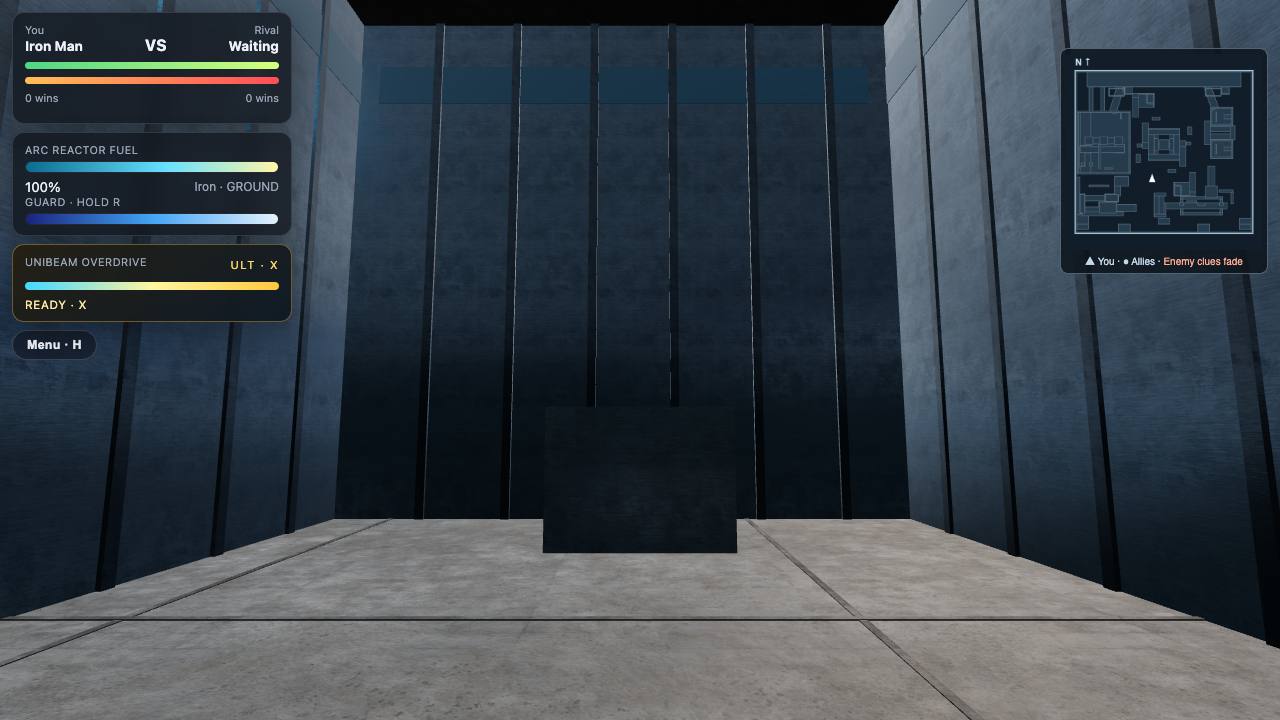
Suit Bay H-01 interior, high
beforeafter
Powerhouse turbines (north faces), high
beforeafter
Powerhouse switchgear row, high
beforeafter
Powerhouse control room, high
beforeafter
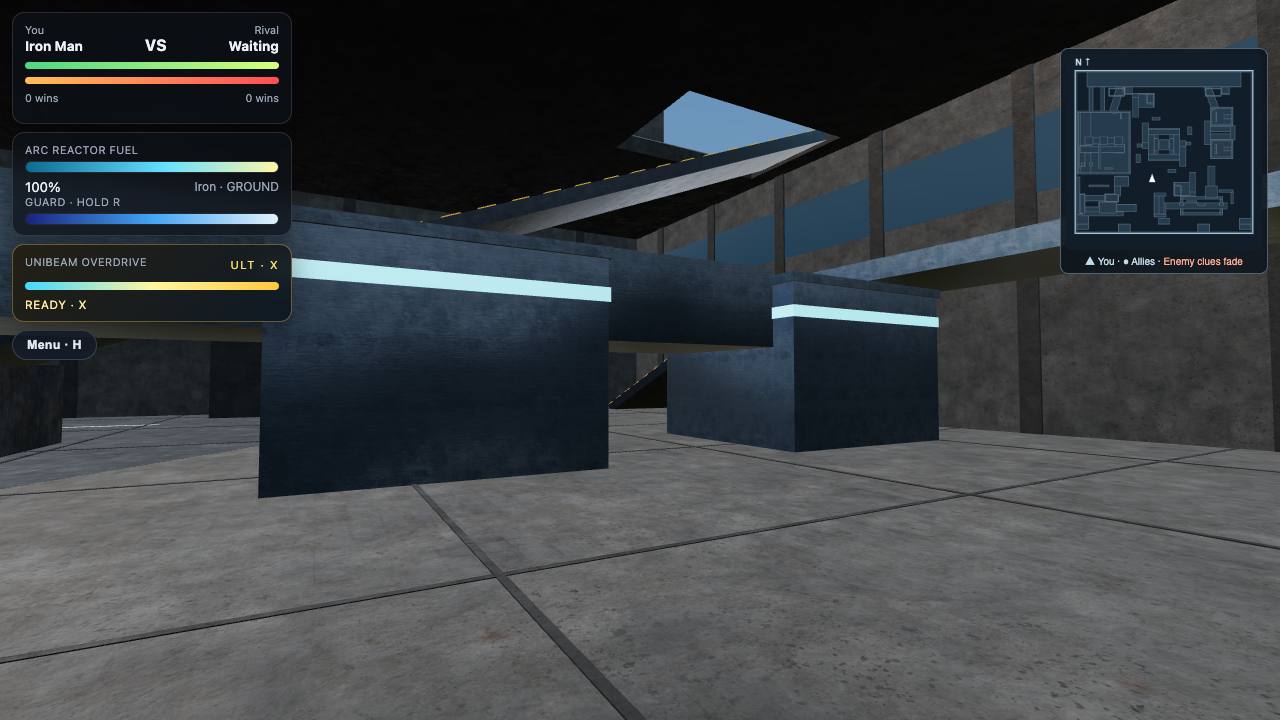
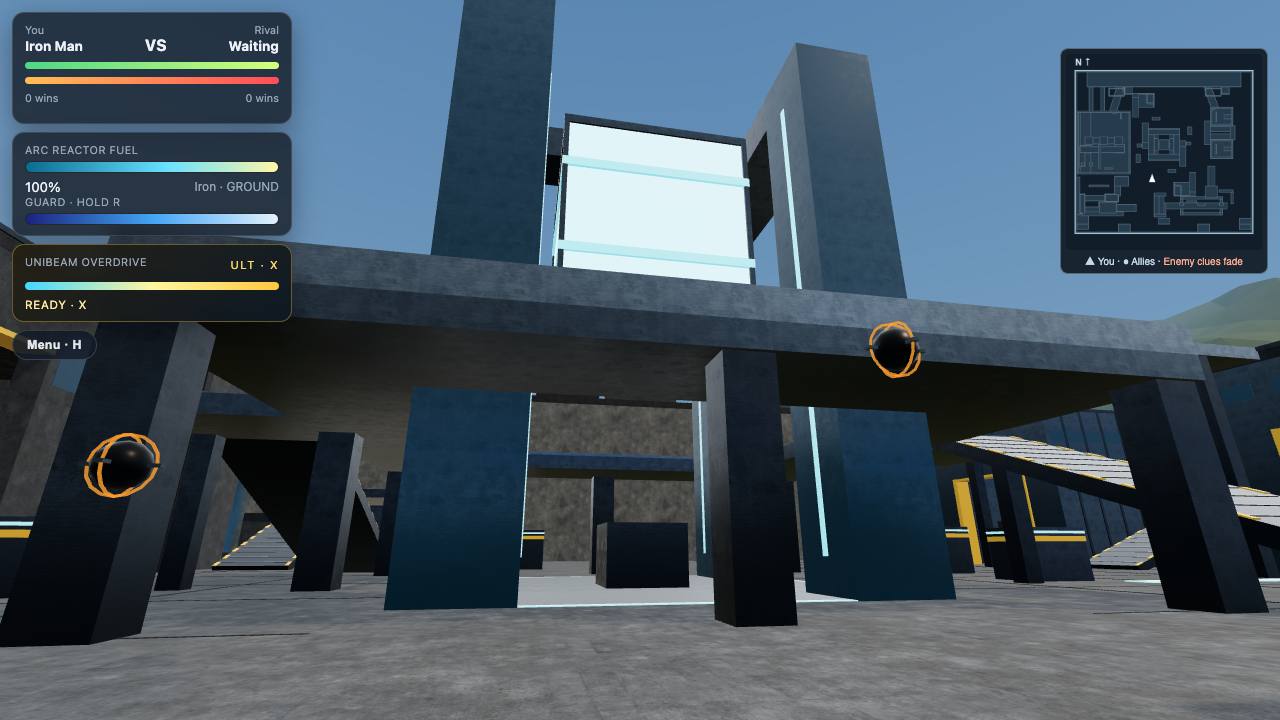
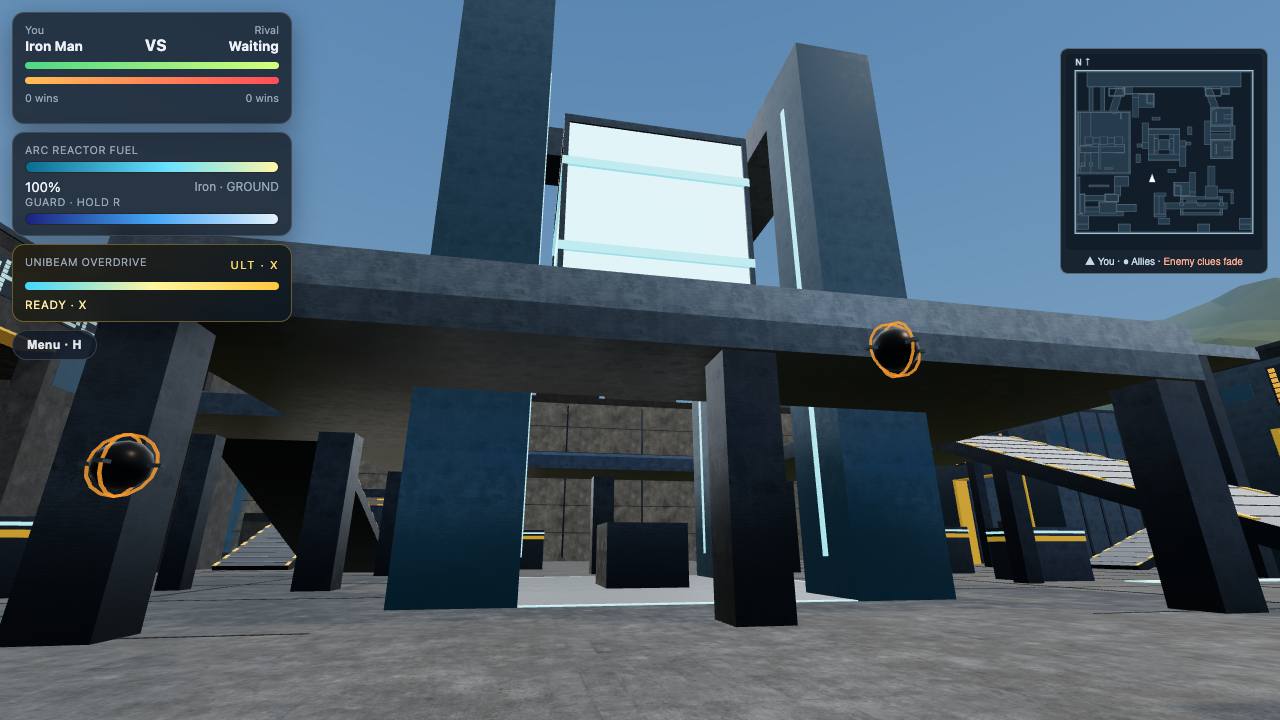
Quay Shed back wall, high
beforeafter
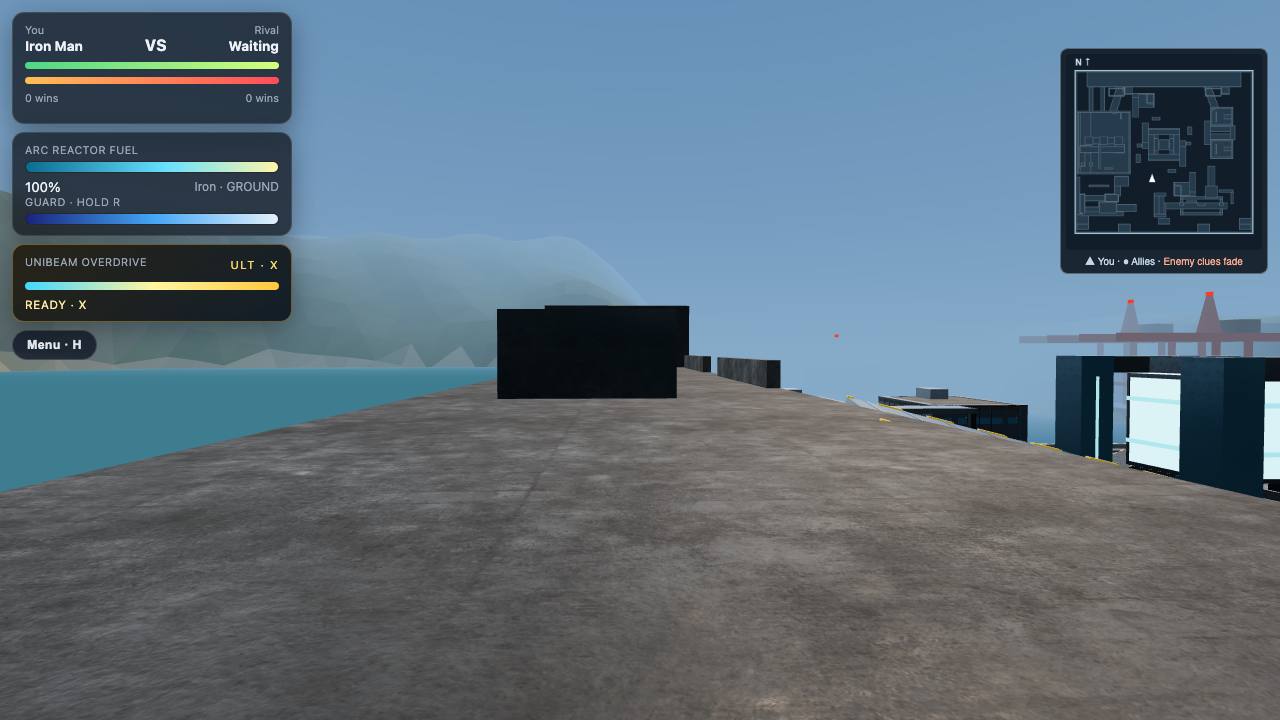
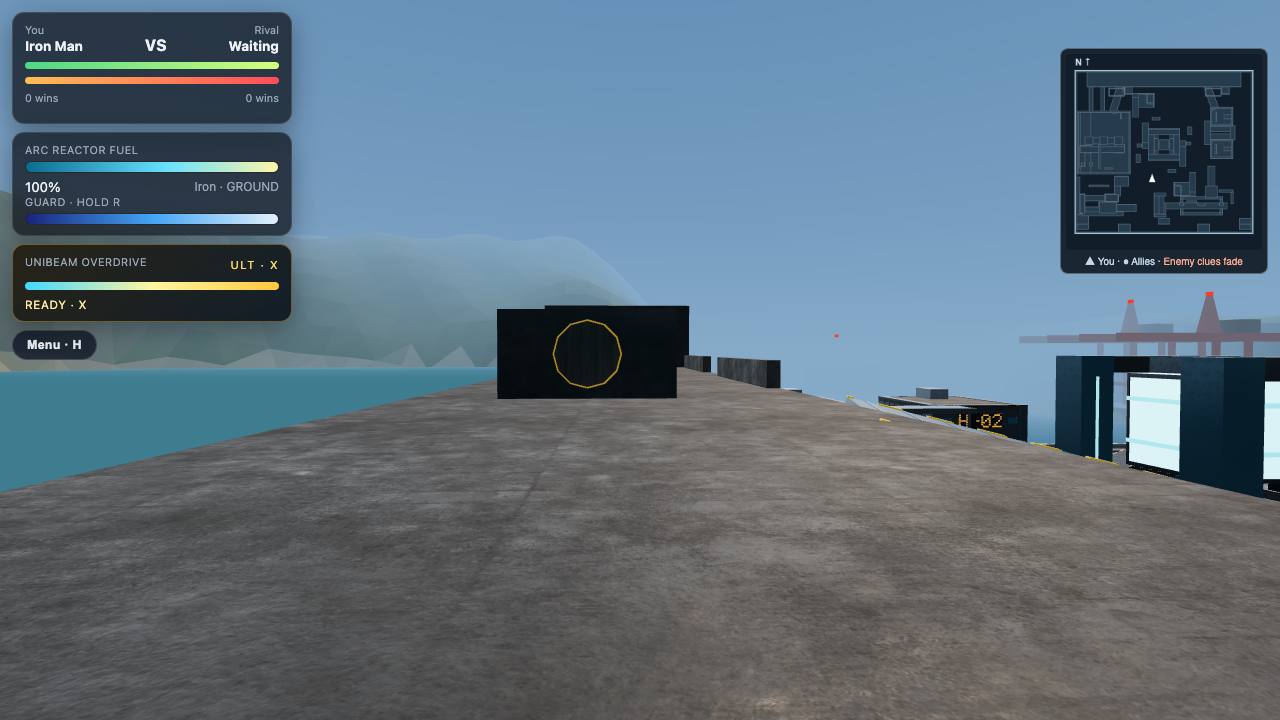
Dam crest (winch cable drum), high
beforeafter
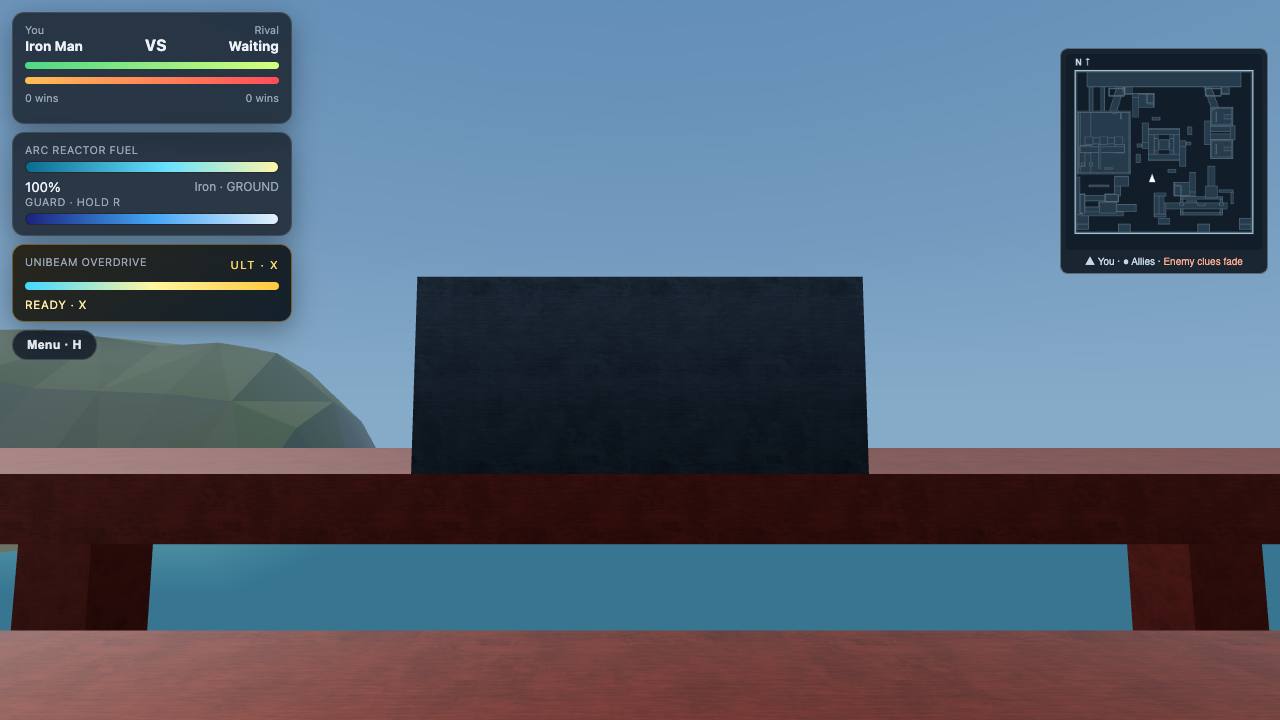
Identity signs at play distance, LOW quality
before · Powerhouse east gateafter
before · Powerhouse south gateafter
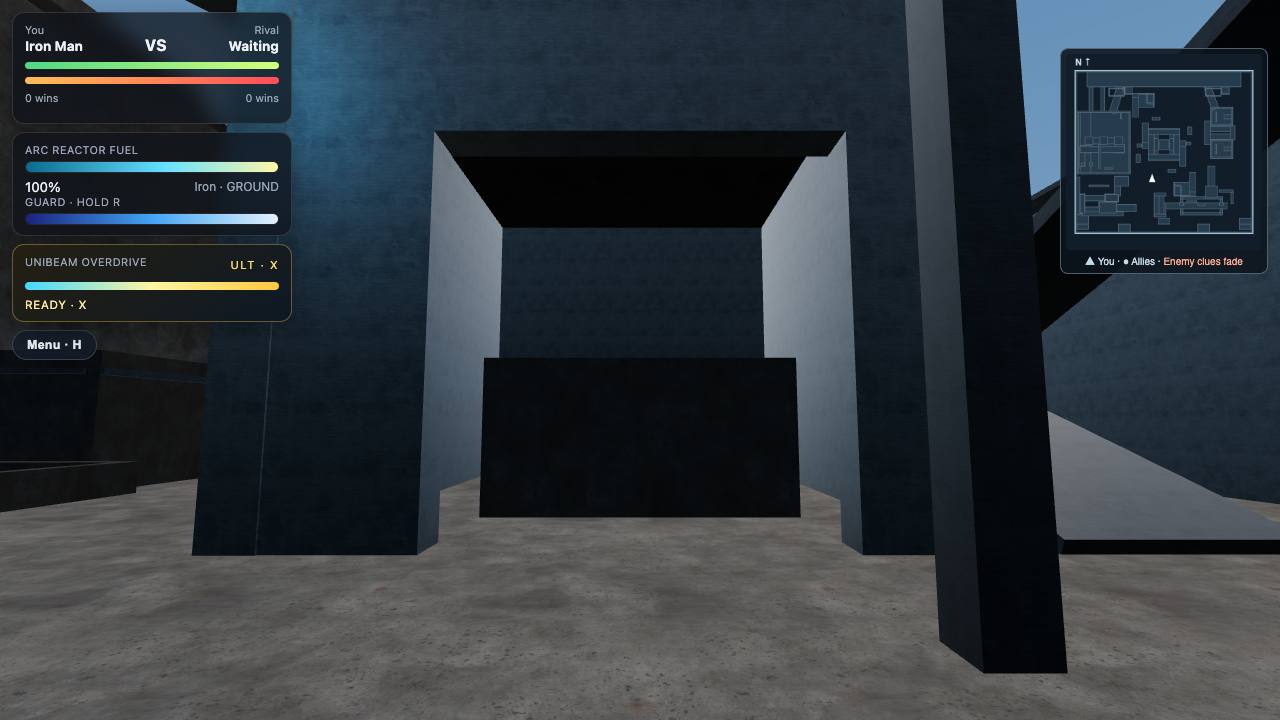
before · H-01 gateafter
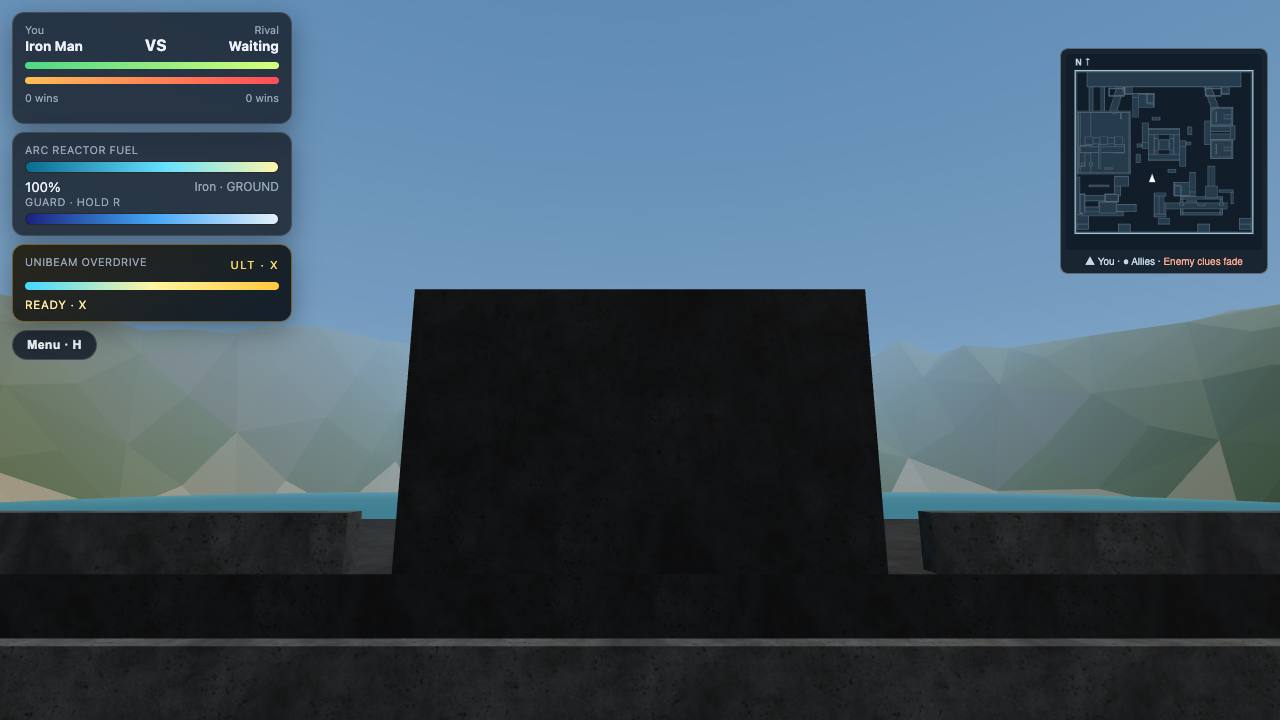
before · barrage gatehouseafter
before · harbour liftafter
Centre and overview stay calm (high)
before · atriumafter · atrium (unchanged on purpose)
before · overviewafter · overview
Quality tiers (after)
Low keeps the identity layer: all six main signs in solid strokes, plus the suit-cradle arc rings. Balanced adds the interior equipment and flowing water. High adds LED-gap lettering, door labels, trusses, shelving and fine seams.
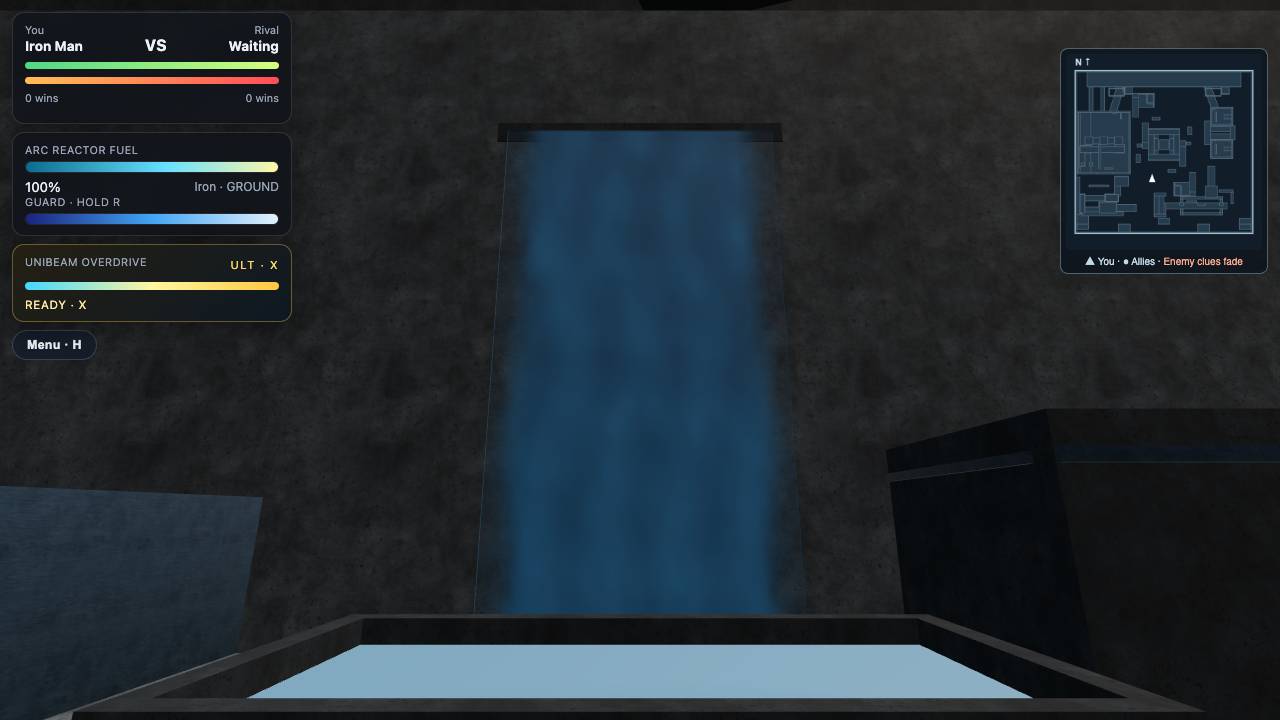
Fixed camera at the west spill fall; frames are about 2 s apart in wall-clock time (headless screenshots are slow).
High and balanced: the fall region changes every frame (mean pixel Δ 8.5–10.9).
Low: Δ is exactly 0.
Direction: a separate close-pair measurement (renders 120–250 ms apart, vertical cross-correlation) found the pattern moving down by 18–31 px in 5 of 6 pairs. One pair read 0, consistent with a repeating texture. The flow texture repeats vertically, so the scroll never jumps.
high f00high f01high f02high f03high f04high f05low f00low f01 (identical)
How it works: one texture-offset write when the fall mesh renders, the same single-owner hook Stormbreak's dam uses. The flow texture is created by each arena build's own material set, so it never alters other water or another build. Tests check that two builds get distinct textures, that the offset advances, and that low has no hook.
Hero visibility in dressed areas
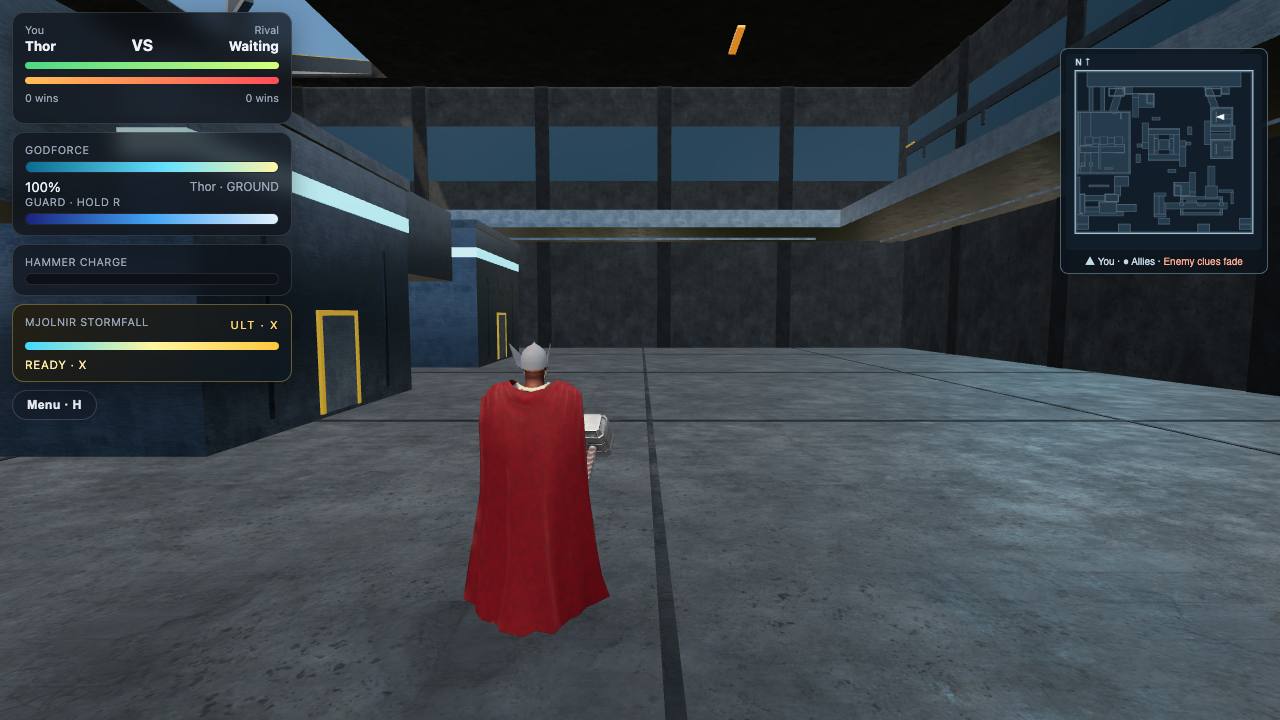
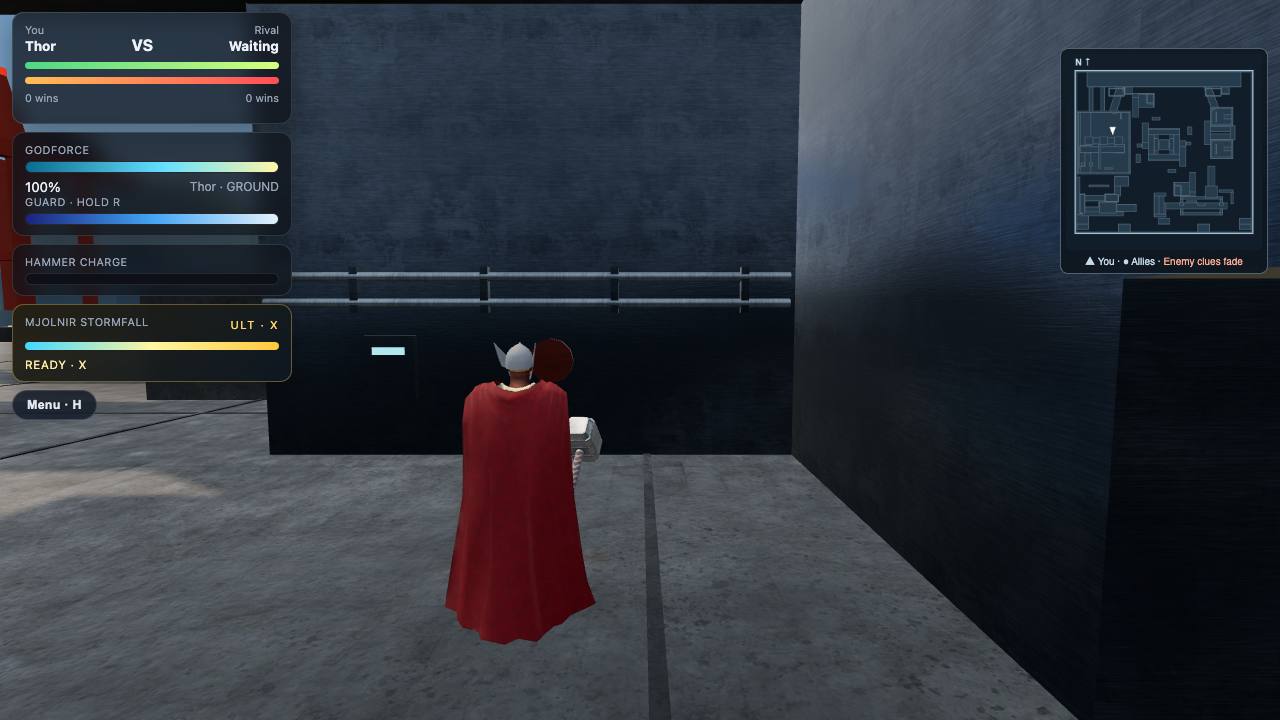
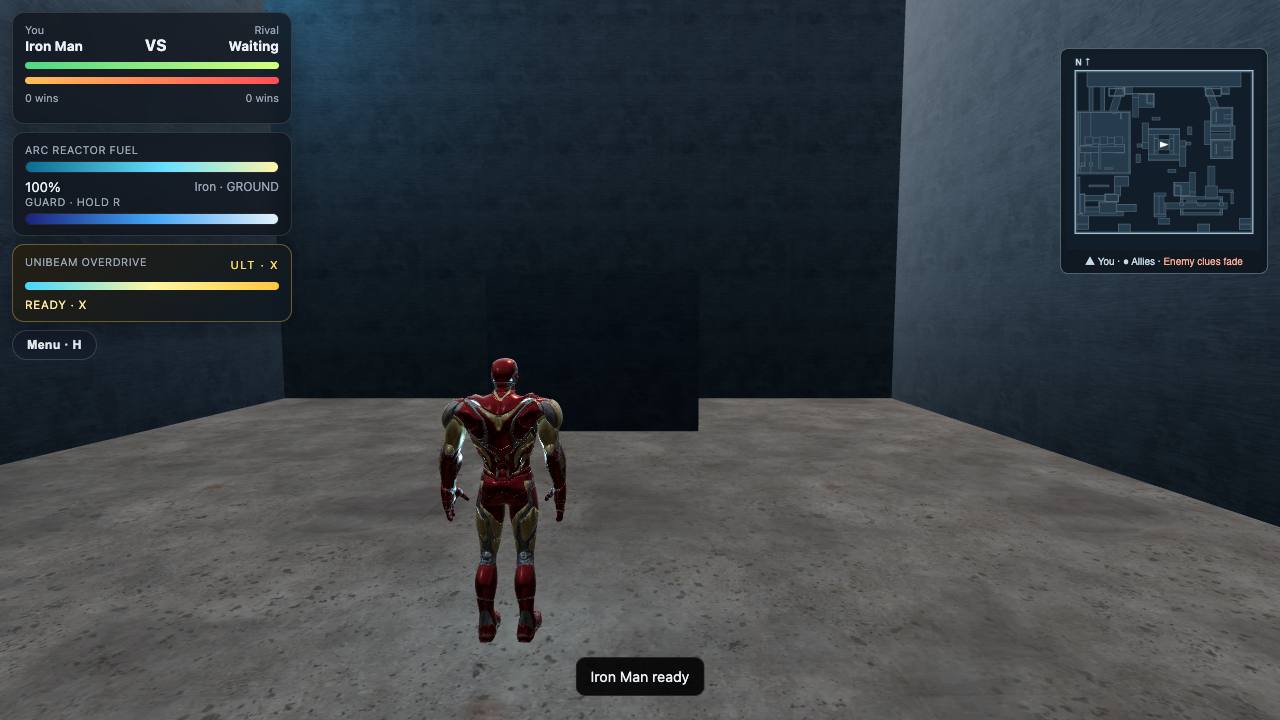
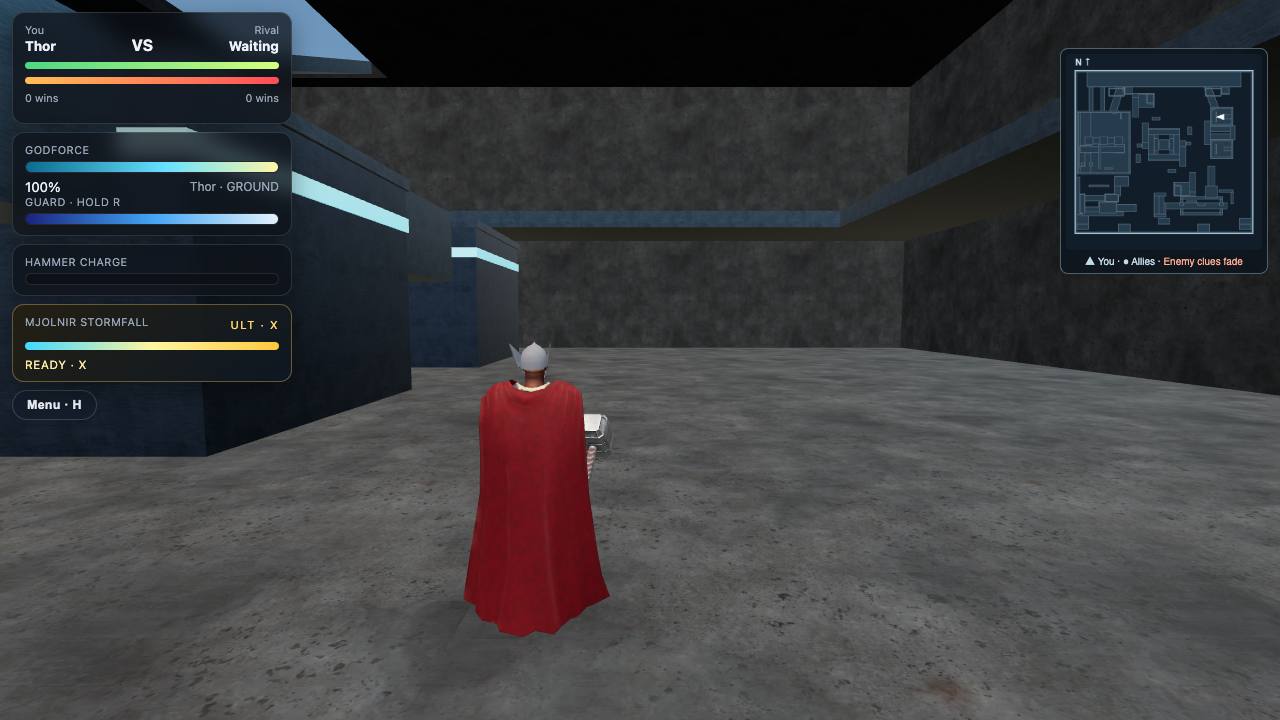
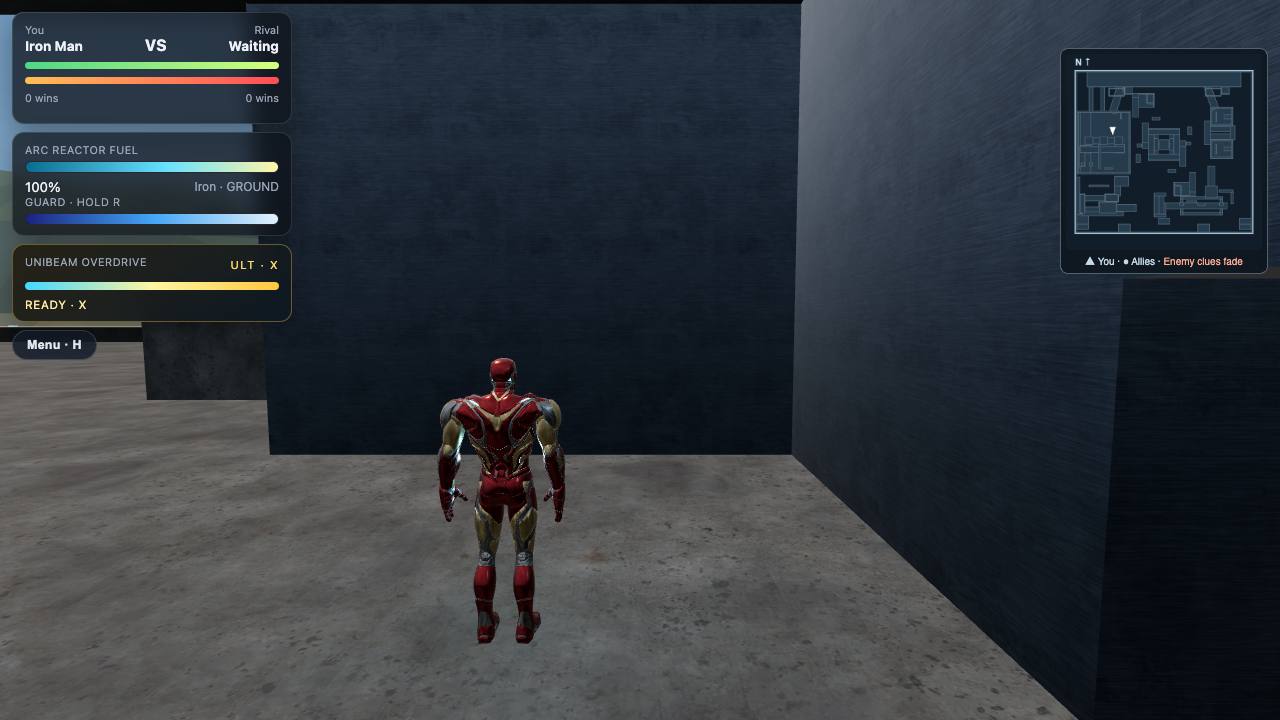
Both heroes, chase camera, in the suit bay, turbine hall and Quay Shed, on high and low. The cyan cradle ring and switchgear lamps don't wash out either hero. Combat warning rings sit on floors that this pass leaves unchanged; the only new floor marking is the small service outline inside each hangar.
high · Iron Man · suit bayhigh · Thor · turbine hallhigh · Thor · Quay Shedlow · Iron Man · suit baylow · Thor · turbine halllow · Iron Man · Quay Shed
Cost (measured)
Tier
Art meshes (built)
Approx. colour draws if all roles visible*
Art triangles
Budget (meshes / tris)
Build time, warm (node)
High
24 (was 24)
~26
37.7k (was 24.9k)
30 / 50k
~267 ms (base 266–270)
Balanced
24 (was 24)
~26
16.1k (was 9.0k)
28 / 20k
~157 ms (base 102–125)
Low
12 (was 12)
~13
7.7k (was 4.7k)
14 / 8k
~89 ms (base 79–87)
* The waterfall body and foam are transparent and double-sided, so each takes two colour passes; shadow passes on high come on top. Renderer telemetry at the matched practice view shows identical draw calls before and after: 34/42 high, 33/41 balanced, 25/33 low (Thor/Iron Man). Renderer geometry and texture counts are also identical, so there are no new textures. No new materials, roles or asset files; the dressing is one new source file. The per-frame addition is one texture-offset write (high and balanced).
Real game-loop frame interval, p50 (uncapped headless)
Baseline a719285
Candidate 0bdc322
High · Thor / Iron Man
4.4 / 4.6 ms
4.5 / 4.6 ms
Balanced · Thor / Iron Man
3.4 / 3.9 ms
3.9 / 4.2 ms
Low · Thor / Iron Man
3.6 / 3.9 ms
3.3 / 3.7 ms
In-run control: Stormbreak high · Thor
12.0 ms
12.4 ms
This compares frame cost between builds on this Mac (M4, headless Chromium, frame cap and vsync off, 3 s windows). It is not native-window FPS, and not a network or 8–10-player measurement. Host pacing differed between the two runs (blank-control p50 41.7 vs 0.2 ms); the Stormbreak control matched, so compare p50 only. One candidate p95 outlier (balanced/Thor 66.9 ms) matches the host-stall pattern seen on the blank control.
Verification at exact SHA 0bdc322
Gate
Result
Static layout and art (node)
271/271: budgets per tier, per-piece honesty, negative fixtures, water ownership/scroll/low-static, coplanar 0 remaining, BVH name contract, spawns 10/5, routes data
Collision identity
Full collision signature hash (names, transforms, bounds, counts) 5b9e6ae7a7b18142, identical to baseline a719285 on high, balanced and low. Lifecycle hash identical across qualities and visits.
Lifecycle (browser)
7/7: arena/quality switching, no geometry/texture growth over repeated visits, old Stormbreak intact, no page errors
Play: camera, cover, bursts (browser)
170/170: 22 camera tight spots × 8 directions × 2 heroes, all cover cases, 10 consecutive-frame bursts
Production build, git diff --check
build passes; clean
Not rerun
Routes, combat, spawns and multiplayer. The collision signature matches the baseline and nothing touches gameplay, server or protocol, so their earlier receipts still apply.
How honesty is checked. Every art piece is recorded with a class (collision shell, water, ramp trim, outside the play area, or auto) and checked individually; no material is exempt.
Tall pieces: sample points must each lie within 0.16 m of a solid.
Flat pieces: must be supported, or hug a solid, across their whole footprint.
Ramp trim: checked in the ramp's own sloped frame.
Sampling is capped at 40 intervals per axis. That gives at most 0.5 m spacing on axes up to 20 m; the 110 longer pieces (wall copings, kerbs, joints, rails, trays) are sampled every 3.9–4.5 m. All follow continuous solids. It's an approximate sampled check, not exact collision agreement.
Negative fixtures must fail and do: a sign bridging a gate opening, a floating plate, a plate overhanging a ledge by 2 m, and ramp trim floating above the slope.
Old issues the stricter check found and fixed:
a free-standing 8 m cyan mast on terrace T28 (now a flat beacon);
42 cm collision-less quay bollards (now 14 cm cleats);
gate hazard frames that visually narrowed hangar and Powerhouse openings by 30 cm (now ≤ 15 cm);
girder braces 1 cm over tolerance.
Limits and remaining taste judgements
Interiors are dressed only on walls, ceilings and existing equipment. Benches, crates or work tables would make the bays feel inhabited, but they need collision, so they're proposed, not built. Example: two 2.4 × 0.9 × 1.0 m workbench solids per suit bay against the side walls (clear of the cradle zone and gate lanes), and a pallet stack in each shed store room. That would need layout, route and spawn re-checks.
Fake light pools were skipped. The emissive panels read well enough, and pools would add transparent overdraw and a generated texture.
Interiors stay fairly dark because there are no dynamic lights by design. Whether the balance feels right needs a human look on a real display.
Sign wording and placement are taste calls: e.g. "HARBOR" on the lift machinery, cyan versus amber per district.
Not checked by eye in live combat: combo warning and minimap visibility. Floor surfaces in combat areas are unchanged, and the minimap is HUD-only.
No native-FPS, India-network or 8–10-live-client claims. The measurements here are headless and relative.
Files
SOURCE-MANIFEST.txt: sha256 of every changed file versus a719285.
evidence/: window receipts (layout, lifecycle, play logs, frame-delivery JSON for baseline and candidate, load/time stamps).
img/: matched stills, water frames, hero stills; img/stormbreak-reference.jpg: the Stormbreak views used for the art direction.